
Can You Stay Home During a Stair Railing Remodel?
Yes, in many cases you can stay home during a stair railing remodel, but how practical that is depends on the size of the project, the location of the staircase, and how much access is temporarily restricted. Some projects create only moderate disruption, while others may involve significant noise, dust, tool use, and periods when the stairs should not be used.
At Master Fabrication, we recommend discussing daily access and household needs before work begins. Knowing when the staircase may be unavailable, how much noise to expect, and which areas need to remain clear makes it much easier to decide whether staying home is comfortable and practical.
Can You Stay Home During a Stair Railing Remodel?
For many railing projects, homeowners can remain in the house while the work is completed.
That does not necessarily mean the home will function normally throughout the project.
Depending on the scope of work, installers may need to remove the existing railing, bring fabricated components through the home, use power tools, and restrict access around the staircase.
Whether staying home makes sense depends on several factors:
Where the staircase is located
Whether it is the home's main staircase
How much of the existing railing is being removed
Whether multiple floors are affected
How much fabrication or adjustment happens on site
Whether you work from home
Whether children or pets are present
How sensitive household members are to noise and dust
A railing replacement on a secondary staircase may be relatively easy to work around. A project involving the main staircase between bedrooms and living areas can affect the household much more.
The best way to plan is to ask the installer how the specific project is expected to affect access and daily routines.
How Disruptive Is a Typical Railing Remodel?
The level of disruption varies considerably.
A straightforward replacement of an existing railing may involve less interruption than a more complex project with multiple landings, custom transitions, or extensive removal work.
Common sources of disruption include:
Removing old railing components
Carrying long materials through the home
Drilling and fastening
On-site adjustments
Dust around mounting areas
Temporary open sections along stairs or landings
Tools and materials occupying nearby space
Restricted movement through the work area
Homeowners should expect the area immediately around the staircase to function as a work zone rather than normal living space.
Installers may also need a clear path from an entrance to the staircase. This can temporarily affect hallways, foyers, or nearby rooms.
If the railing is part of a larger stair renovation involving flooring, treads, painting, or trim work, disruption may be greater because several trades or phases of work could overlap.
The scope should be discussed before installation so the household understands what to expect.
Will Stair Access Be Limited During the Project?
Possibly, and this is one of the most important issues to discuss before the remodel begins.
If an existing railing is removed, parts of the staircase may temporarily be unsafe or unsuitable for normal use.
Installers may also need uninterrupted access while components are positioned or secured.
Depending on the project, stair access may be:
Fully available at certain times
Temporarily restricted
Limited to specific periods
Unavailable while particular work is underway
Do not assume that family members can simply walk through the work area whenever they need to move between floors.
Before the project starts, think about anything you normally keep upstairs or downstairs that may be difficult to access temporarily.
This can include:
Medications
Work equipment
Children's supplies
Clothing
Chargers
Pet supplies
Toiletries
Food or drinks
Laundry
Moving essential items to the floor where you expect to spend most of the day can reduce unnecessary trips through the work zone.
If the staircase is the only practical route between floors, ask the installer specifically how access will be managed.
How Much Noise and Dust Should You Expect?
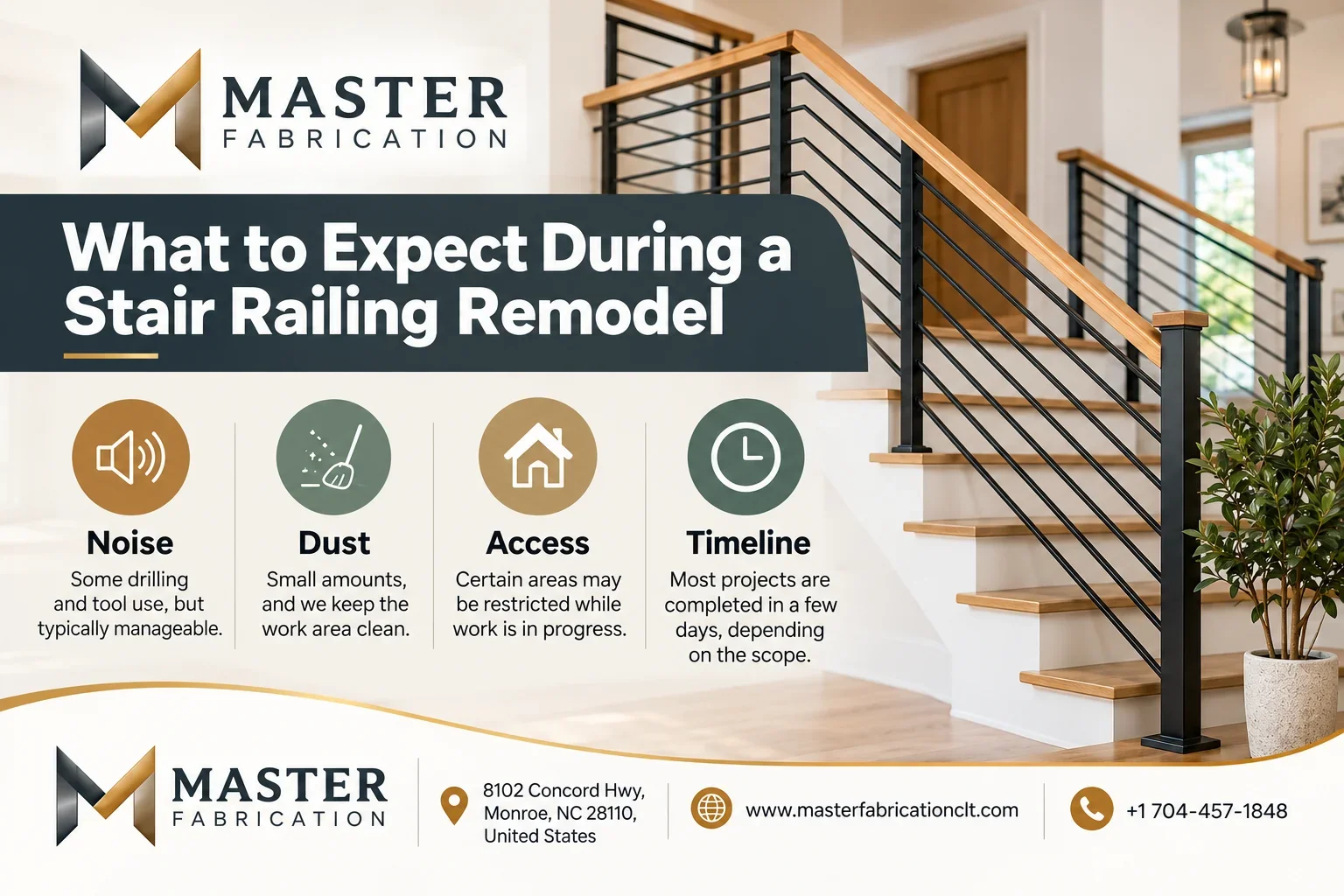
A stair railing remodel can create both noise and dust, although the amount depends on the work being performed.
Noise may come from:
Drills
Drivers
Removal tools
Cutting or grinding equipment
Fastening systems
Moving metal components
General construction activity
Some portions of the project may be relatively quiet, while others may make phone calls, online meetings, or quiet activities difficult.
Dust can occur when existing railing components are removed or when mounting areas need to be prepared or adjusted.
The amount may depend on the materials around the staircase, including wood, drywall, flooring, and existing trim.
Closing doors to nearby rooms can sometimes help reduce how much dust travels through the home.
Homeowners can also move delicate electronics, fabrics, and decorative objects away from the staircase before work begins.
Ask the installation team how they plan to protect the immediate work area and whether they recommend any additional preparation.
What Should You Do With Children and Pets?
Children and pets should be kept away from the work zone.
This is especially important during periods when railing sections have been removed.
An open stair edge or landing that is normally protected by a railing may become temporarily hazardous.
Tools, cords, sharp materials, and metal components can also create risks for curious children or animals.
For pets, consider:
Keeping them in a closed room
Using a secure area away from the stairs
Arranging for them to stay elsewhere
Planning walks or outings during busier work periods
Do not rely on an open baby gate or temporary barrier if the installer needs to move equipment through the same area.
For children, explain clearly that the staircase and surrounding area are off-limits while the crew is working.
If young children regularly move between floors, it may be easier to spend part of the day elsewhere rather than continually managing access around the work zone.
Can You Work From Home During the Remodel?
You may be able to work from home, but it is worth planning around noise.
If your work consists mainly of independent computer tasks, staying home may be manageable.
If your day includes frequent calls, video meetings, recordings, or other activities that require a quiet environment, a railing remodel can be more disruptive.
Consider where your workspace is located relative to the staircase.
A closed office on the opposite side of the home may provide enough separation. A desk positioned near the foyer or staircase will likely experience more noise.
Before installation day, ask whether the project is expected to involve especially noisy work.
You can then schedule important calls during quieter periods if possible or work from another location for part of the day.
Also think about internet equipment, electrical outlets, and access routes. Make sure installers can reach the staircase without repeatedly moving through your workspace.
If you need consistent quiet throughout the day, making alternate work arrangements may be more practical.
Do You Need to Move Furniture or Protect Nearby Rooms?
It is a good idea to remove movable items from the immediate work area.
Clear the staircase, landings, and nearby access paths of items such as:
Side tables
Floor lamps
Plants
Shoes
Baskets
Toys
Decorative objects
Small furniture
Furniture that sits very close to the staircase may also need to be moved.
Large items that are difficult to relocate can sometimes remain in place if they do not interfere with access, but it is best to ask the installer.
Wall decor deserves attention as well.
Remove nearby:
Artwork
Mirrors
Photo frames
Decorative shelves
Fragile hanging objects
This helps protect items from accidental bumps and vibration.
Doors to nearby rooms can usually remain closed during dusty work where appropriate. Valuable or delicate objects should be moved farther from the work area if possible.
Avoid applying protective tape directly to finished walls, wood, or flooring unless you know the material is safe for that surface. Your installer may already have preferred protection methods.
When Might It Be Better to Leave the House Temporarily?
There are situations where leaving for part of the day may simply be more convenient.
You may want to make alternate plans if:
The main staircase will be unavailable
Young children are home
Pets are difficult to keep away from the work zone
You need several hours of uninterrupted quiet
You are sensitive to construction noise
The work area is near your primary living space
Multiple areas of the home are affected
Removal work is expected to create significant dust or noise
Leaving temporarily does not necessarily mean you need to be away for the entire project.
Some homeowners may find it easier to leave during the noisiest or most disruptive portion and return later.
If you plan to leave, make sure the installation team knows how to contact you if questions arise.
Also confirm whether someone needs to be present at the beginning or end of the workday for access, approvals, or the final walkthrough.
What Questions Should You Ask the Installer Before Work Begins?
A few practical questions can help you plan your household around the remodel.
Consider asking:
Will the stairs remain usable during the project?
When is access likely to be restricted?
How long might those restrictions last?
Will any railing sections be completely open during the work?
How much noise should we expect?
Will cutting or grinding happen inside the home?
How are floors and walls being protected?
Should nearby furniture be moved?
Should adjacent rooms be closed off?
Where will tools and railing components be stored?
Can pets or children safely remain elsewhere in the house?
Will someone need to be home throughout the project?
Are there periods when leaving the house would be more convenient?
When can the staircase return to normal use?
It is also helpful to discuss any specific household concerns.
For example, tell the installer if someone has mobility limitations, works nights, needs access to an upstairs office, or has another reason that stair availability is especially important.
These details can help everyone plan around the work more effectively.
How Can You Make the Remodel Easier on Your Household?
Preparation can make a noticeable difference.
Start by identifying how your household normally uses the staircase.
If family members move between floors frequently, gather anything you may need before access becomes restricted.
Clear pathways in advance so installers have enough room to move materials safely.
If you work from home, prepare an alternate workspace away from the staircase.
For pets and children, establish a separate area before the crew arrives rather than trying to reorganize the household after tools and materials are already in place.
Other helpful steps include:
Removing fragile wall decor
Moving small furniture
Closing nearby room doors
Securing pets
Keeping children away from the work zone
Planning important calls around noisy work
Preparing meals, supplies, or clothing on the appropriate floor
Confirming how installers will enter and exit
Keeping your phone available in case questions come up
Good preparation will not eliminate all disruption, but it can prevent unnecessary inconvenience.
FAQs
Can I stay upstairs while my stair railing is being replaced?
Possibly, but it depends on whether the staircase remains usable. Ask the installer in advance because access may be temporarily restricted during certain phases of the work.
Is a stair railing remodel very noisy?
Some parts can be. Drilling, removal, fastening, and adjustments may create significant noise. The amount depends on the project.
Will there be a lot of dust?
Dust levels vary. Removal and preparation work around walls, floors, and mounting areas can create dust, while simpler installations may create less.
Should I leave the house with my children during railing installation?
You do not always need to leave, but keeping children completely away from the work zone is important. Leaving temporarily may be easier if the main staircase is being worked on.
Can my dog stay home during the remodel?
Yes, if the dog can remain securely separated from the work area. Pets should not have access to tools, railing materials, or temporary open stair edges.
Can I work from home while a stair railing is installed?
Possibly. If your work requires quiet calls or meetings, however, you may want an alternate workspace because noise levels can vary throughout the project.
Plan Around the Project, Not Just the Installation
Whether you can comfortably stay home during a stair railing remodel depends on how the work affects the areas you use every day.
Some projects allow homeowners to continue most of their normal routines. Others can temporarily limit stair access, create significant noise, or make the main living area less convenient.
Master Fabrication recommends discussing access, household needs, pets, children, dust, noise, and work-from-home concerns before the project begins. Knowing what to expect makes it easier to decide whether to remain home, leave temporarily, or adjust your routine around the most disruptive parts of the remodel.