
How Long Does It Take to Replace Stair Balusters?
Replacing outdated stair balusters can make a noticeable difference in your home's appearance without requiring a complete staircase remodel. But before scheduling the work, you probably want to know how long the installation will take and whether your staircase will be usable during the project.
The good news is that baluster replacement is often relatively straightforward, especially when the existing handrail and newel posts can remain. However, the number of balusters, staircase layout, material selection, and any necessary repairs can affect the schedule. Here's what to expect when planning your stair baluster replacement.
Quick Answer: How Long Does Baluster Replacement Usually Take?
A straightforward stair baluster replacement can often be completed in one day by a professional installer, while larger or more complicated staircases may require two days or longer. The actual timeline depends on the number of balusters, staircase configuration, existing railing condition, and installation method. Material ordering, custom work, and finishing may also add time before or after installation.
These estimates refer mainly to the physical installation, not necessarily the entire project from consultation to completion.
For example, replacing wood balusters with standard iron balusters on one straight staircase may be relatively quick if the existing handrail and posts are secure.
A project involving multiple stair flights, curved sections, or additional repairs will generally take longer.
The best way to establish a realistic schedule is to have the staircase evaluated before work begins.
What Happens During a Stair Baluster Replacement?
Replacing balusters involves more than removing the old spindles and installing new ones.
Several stages help ensure the replacement components fit properly and the finished railing remains secure.
1. Staircase evaluation and measurements
Before installation, the contractor examines the existing handrail, newel posts, baluster spacing, and attachment points.
Measurements help determine the number and size of replacement components.
This assessment usually happens before the installation appointment.
2. Preparing the work area
On installation day, nearby flooring, stair treads, and other surfaces may need protection.
Furniture or decorative items close to the staircase may also need to be moved.
3. Removing existing balusters
The old wooden or metal balusters are removed using methods appropriate for the existing railing.
The time required depends on how they were originally attached and whether they can be removed without damaging surrounding components.
4. Preparing the mounting locations
Existing openings may need adjustments to accommodate the replacement balusters.
The contractor may also need to address minor damage or irregularities left by the original installation.
5. Installing the new balusters
The replacement balusters are fitted and secured using the appropriate installation method.
Some components require individual adjustments to account for stair angles and changes in height.
6. Final adjustments and cleanup
Once the balusters are installed, the contractor checks their alignment, spacing, and connections.
Any included finishing work and cleanup can then be completed.
Although the visible installation may happen relatively quickly, careful preparation and final checks are important parts of the process.
How Staircase Size Affects Installation Time
The number of balusters being replaced is one of the biggest factors affecting installation time.
A small staircase with one straight run generally requires less work than a large staircase with multiple flights and open landings.
However, the number of steps alone does not tell the whole story.
Single-flight staircases
A straightforward staircase with one flight and an existing secure handrail is often among the simpler replacement projects.
When the materials are available and the installation conditions are suitable, professional installers may be able to complete the work within a day.
Multiple stair flights
A staircase with two or more flights involves additional balusters, measurements, and transitions.
If the railing continues across an upper landing, that section must also be included in the installation plan.
These projects may require additional working time.
Curved and winding staircases
Curved staircases can be more demanding because baluster lengths, positions, and connection angles may vary.
The installer may need to make more individual adjustments to achieve consistent alignment.
A relatively small curved staircase could therefore take longer than a larger straight staircase.
The complexity of the layout matters just as much as the number of balusters.
Does Baluster Material Change the Timeline?
Yes. Different materials have different fitting, connection, and finishing requirements.
The difference may be relatively small on a straightforward project, but material selection can influence the overall installation schedule.
Iron balusters
Iron balusters are a popular replacement for traditional wooden spindles.
Many are available in standard styles and finishes, making them suitable for projects that retain existing wooden handrails.
However, individual pieces may still need adjustments to match the staircase dimensions.
The installation time also depends on the mounting method and whether existing openings are compatible.
Wooden balusters
Wooden balusters may require additional cutting, fitting, sanding, or finishing.
If the replacement wood is unfinished, painting or staining can extend the project beyond the basic installation.
Custom metal components
Specialty metal balusters or decorative panels may require fabrication before installation.
Even when fitting takes little time, manufacturing and finishing the components can add to the overall project schedule.
When comparing materials, ask about both availability and installation requirements.
A readily available product may allow the project to move forward sooner than a specially ordered design.
Can Existing Handrails and Newel Posts Be Reused?
In many cases, yes. Keeping the existing handrail and newel posts can simplify a baluster replacement.
These components form an important part of the railing system. If they are structurally sound and compatible with the new balusters, removing them may not be necessary.
This can reduce the amount of demolition, fitting, and finish work involved.
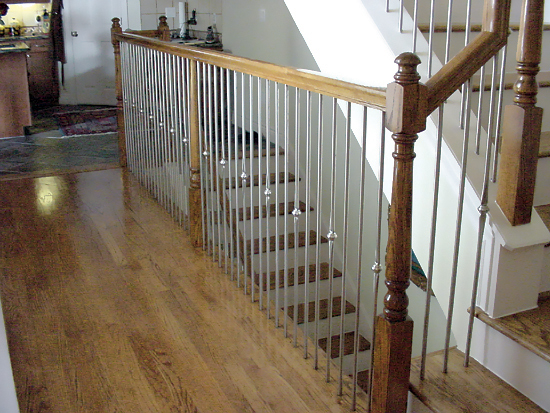
For example, homeowners replacing wooden spindles with iron balusters may be able to keep their existing oak handrail and posts.
However, the contractor should first confirm that the components are suitable for reuse.
Conditions that may extend the project include:
Loose or unstable newel posts
Damaged handrails
Cracked or deteriorated wood
Incompatible mounting openings
Spacing that requires additional balusters
Previous repairs that complicate removal
If the existing components need repairs, the installation schedule may change.
Replacing balusters alone will not correct an unstable railing, so these issues should be addressed before the work is considered complete.
How Custom Designs or Layouts Can Add Time
A decorative baluster pattern does not automatically mean a longer installation.
Many standard iron balusters are designed to be combined in repeating arrangements.
However, certain designs require more planning and individual fitting.
For example, alternating plain and decorative balusters may require careful layout to keep the pattern balanced along the staircase.
More complicated projects may involve:
Different baluster lengths: Staircases with unusual dimensions may require additional individual fitting.
Decorative patterns: Certain arrangements need careful positioning to achieve the intended appearance.
Curved handrails: Changing angles can make alignment more challenging.
Multiple landings: Transitions between sloped and level sections require separate measurements and planning.
Specialty finishes: Custom colors or finishes may introduce additional ordering or production time.
The best way to avoid unnecessary delays is to finalize the selected pattern and confirm measurements before the installation appointment.
This allows the contractor to prepare the correct materials rather than making major design decisions after work has started.
How to Prepare Your Staircase Before Installation
A little preparation can make baluster replacement easier for both you and the installation team.
You do not need to remove the existing spindles or prepare the mounting holes yourself. In fact, those tasks are generally better left to the installer.
Instead, focus on making the area accessible and protecting items that could be affected by the work.
Before installation day:
Clear nearby furniture: Move small tables, chairs, and other items away from the staircase.
Remove decorative items: Take down pictures or decorations that could be disturbed during installation.
Keep pets away: Arrange a separate area for pets while work is underway.
Plan for children: Prevent children from accessing the work area.
Discuss floor protection: Ask whether the contractor will provide coverings for surrounding surfaces.
Confirm material selections: Finalize the baluster style and finish before the scheduled installation.
Arrange alternate access: Consider how family members will move between floors while the staircase is being worked on.
If you are also painting walls, replacing flooring, or refinishing the staircase, discuss the order of work with your contractor.
Coordinating these projects can help avoid unnecessary touch-ups or damage to recently completed finishes.
Can You Stay Home During Baluster Replacement?
Yes, homeowners can generally remain in the house during stair baluster replacement.
However, the staircase or nearby hallway may be temporarily unavailable while work is underway.
The amount of disruption depends on the project.
For a straightforward replacement, installers may work primarily around the existing staircase without affecting other rooms.
You may hear cutting, drilling, or other installation noise, and some dust may be produced during removal and preparation.
Will you be able to use the stairs?
That depends on the stage of installation and the method used to secure the new balusters.
During removal and fitting, the railing may not provide normal protection or support.
Adhesives, finishes, or other installation materials may also require time to cure before the stairs can be safely used.
Ask your contractor when normal stair access can resume.
Do not assume the staircase is safe simply because the replacement balusters appear to be in place.
If bedrooms or essential rooms are located upstairs, discuss access arrangements before the project begins.
What Happens After the New Balusters Are Installed?
Once the replacement balusters are secured, the contractor should review the finished installation.
This helps confirm that the new components are properly positioned and that the railing is suitable for normal use.
The final review may include:
Checking baluster alignment: The spacing and arrangement should appear consistent with the approved design.
Reviewing connections: The balusters should be securely attached using the appropriate mounting system.
Inspecting the handrail: Existing components should remain stable after the replacement.
Checking finishing details: Decorative shoes, trim, and visible connection areas should be reviewed.
Cleaning the work area: Dust, removed materials, and installation debris should be addressed as agreed.
Providing care instructions: The contractor may explain how to clean the new balusters and when any adhesives or finishes will be fully cured.
Minor wood touch-ups may be necessary where the original spindles were attached.
If painting or staining is part of the project, the finishing process can require additional drying time.
Before the installer leaves, confirm when the staircase can be used normally and whether any additional work remains.
Stair Baluster Replacement in Charlotte, NC
For Charlotte homeowners, replacing outdated stair balusters can be a practical way to refresh an interior staircase without committing to a complete railing renovation.
Many homes feature wooden handrails and newel posts that may still be suitable for use even when the existing spindles look dated.
Replacing those spindles with iron balusters can create a different appearance while keeping much of the original staircase intact.
The timeline depends on the property's existing conditions.
A straightforward staircase in a newer home may require less preparation than an older staircase with previous modifications or uneven mounting locations.
Homes with open second-floor landings, multiple stair flights, or curved sections may also need more installation time.
The important step is to confirm the work involved before scheduling.
Plan Your Stair Baluster Replacement With Master Fabrication
At Master Fabrication, we help homeowners in Charlotte, NC, and surrounding communities update their staircases with iron baluster replacements and custom railing work.
We know that having work completed inside your home can affect your daily routine. That's why it is important to understand the project scope, material requirements, and installation conditions before work begins.
Whether you want to replace traditional wooden spindles with iron balusters or update an existing baluster pattern, we can help you evaluate your staircase and explore suitable options.
Our in-person design consultations allow us to review existing handrails and newel posts, discuss available baluster styles, and identify any conditions that could affect the installation schedule.
Contact Master Fabrication today to request a consultation and get a project-specific timeline for your stair baluster replacement.
FAQs About Stair Baluster Installation Time
Can stair balusters be replaced in one day?
Yes. Some straightforward professional baluster replacements can be completed in one day, particularly when the staircase has a single straight run and the existing handrail and posts are in good condition. Larger or more complex installations may take longer.
Does replacing wood balusters with iron take longer than replacing them with wood?
Not necessarily. The time depends on the existing mounting locations, installation method, and finishing requirements. Wood replacements may require painting or staining, while iron balusters may need individual fitting.
Do I need to remove my existing handrail before replacing balusters?
Not always. Many baluster replacement projects can retain the existing handrail and newel posts if they are secure and compatible with the new components.
How long does it take to replace balusters on a curved staircase?
Curved staircases often require more time because baluster lengths, angles, and positions may vary. The exact duration depends on the staircase layout and the number of components being replaced.
Will baluster replacement make a mess inside my home?
Some dust and debris are possible during removal, cutting, and fitting. Professional installers generally take steps to protect nearby surfaces and clean the work area after installation.
Can I use my stairs immediately after the new balusters are installed?
Not always. Some mounting methods use adhesives or other products that require curing time. Follow your installer's instructions before resuming normal stair use.
How far in advance should I schedule a baluster replacement?
Scheduling depends on material availability, the contractor's workload, and whether custom components are required. It is best to arrange a consultation early, especially if you want the project completed before another home renovation or event.