
Indoor vs Outdoor Railing Finishes: What Homeowners Should Know
A metal railing that looks great inside your home may not hold up the same way on your porch, balcony, or outdoor staircase. While indoor railings are mostly protected from the weather, outdoor railings deal with sunlight, rain, humidity, and changing temperatures throughout the year.
These differences matter when choosing a finish. Some coatings focus on appearance and everyday wear, while others are formulated to protect metal against outdoor exposure. Knowing what each environment demands can help you choose a finish that looks good, lasts longer, and fits your maintenance expectations.
Quick Answer: How Do Indoor and Outdoor Railing Finishes Differ?
Indoor railing finishes mainly focus on appearance, scratch resistance, and everyday durability, while outdoor railing finishes need additional protection against moisture, corrosion, sunlight, and temperature changes. Powder coating, paint, and other protective finishes can work in either setting when properly specified. The right choice depends on the railing material, exposure conditions, desired appearance, and maintenance requirements.
What Matters Most for Indoor Railing Finishes?
Indoor railings generally face less environmental stress than outdoor railings. Without regular exposure to rain and direct weather conditions, homeowners have more flexibility when choosing decorative finishes.
However, appearance is not the only consideration.
Stair railings are touched frequently, and certain areas experience more wear than others. Handrails, for example, may be exposed to skin oils, cleaning products, and repeated contact.
When selecting an indoor railing finish, consider:
Appearance: The color, sheen, and texture should complement your flooring, walls, and surrounding features.
Scratch resistance: A durable finish helps reduce visible damage from everyday use.
Cleaning requirements: Smooth, easy-to-clean surfaces are practical for frequently used staircases.
Color consistency: A consistent finish helps decorative balusters and railing sections look coordinated.
Moisture exposure: Railings near entryways or humid interior spaces may need additional protection.
Decorative finishes are also popular for indoor wrought iron balusters. Depending on the product, homeowners may choose matte black, textured colors, or patina-style finishes.
Since indoor railings are usually protected from harsh weather, the decision often comes down to finding a balance between durability and the appearance you want.
What Challenges Do Outdoor Railings Face?
Outdoor railings experience conditions that can gradually affect both the coating and the metal underneath.
Rain, humidity, sunlight, and temperature changes can contribute to finish deterioration, especially when the wrong coating is used.
Moisture and corrosion
Metal railings exposed to rain need a protective system that helps limit moisture reaching corrosion-prone surfaces.
If the coating becomes scratched, chipped, or damaged, exposed steel may begin to rust.
This is particularly important around joints, welds, fasteners, and areas where water can collect.
Direct sunlight
Sunlight can cause certain finishes to fade, lose their gloss, or develop a chalky appearance.
A coating that performs well indoors may not provide the same color retention outdoors.
Temperature changes
Outdoor railings expand and contract as temperatures change.
A suitable coating system must maintain its adhesion and protective performance under expected service conditions.
Dirt and environmental buildup
Pollen, dust, leaves, and other debris can accumulate on exterior railings.
When moisture remains trapped around these deposits, it may contribute to coating damage or corrosion.
For these reasons, outdoor railing finishes should be selected according to the actual installation location rather than appearance alone.
Which Coating Options Work Best Indoors?
Several finish types can be suitable for indoor metal railings. The best option depends on the railing material, desired appearance, and expected use.
Powder coating
Powder coating is commonly used on metal railing components because it creates a durable, uniform finish when properly applied.
It is available in different colors, textures, and sheen levels.
For indoor applications, powder coating can provide good resistance to everyday handling and wear.
Some indoor powder coatings use epoxy or epoxy-polyester formulations. These may perform well indoors but are generally less suitable for prolonged UV exposure than coatings designed specifically for exterior use.
Painted finishes
Painted metal railings provide flexibility in color selection and may allow easier localized touch-ups, depending on the coating system.
However, paint performance depends on surface preparation, primer compatibility, and the quality of application.
Decorative and patina-style finishes
Patina-style finishes can add character to iron balusters and ornamental railings.
These are often selected to coordinate with traditional interiors, wood handrails, or decorative architectural details.
Their care requirements depend on the specific finish and protective topcoat.
For indoor railings, homeowners should consider how the finish looks alongside existing materials and how easily it can be maintained.
Which Finishes Are Better for Outdoor Exposure?
Outdoor railings need finishes specifically intended for exterior conditions.
A decorative finish alone may not provide sufficient corrosion or UV protection.
Some commonly considered options include:
Exterior-grade polyester powder coating
Polyester powder coatings designed for outdoor use generally provide better UV stability than standard epoxy-based powder coatings.
They are commonly used on architectural metal products because they can offer good color retention and weather resistance.
However, not all powder coatings provide the same protection. Product formulation, pretreatment, application, and curing all influence long-term performance.
Protective paint systems
An exterior paint system may use compatible primers and topcoats to protect metal from moisture and corrosion.
These systems can be appropriate when selected and applied for the railing material and exposure conditions.
Galvanizing with a protective topcoat
For certain steel railings, galvanizing may provide an additional layer of corrosion protection.
A compatible paint or powder-coated finish can then be applied over properly prepared galvanized steel.
This combination may be worth considering for projects with more demanding exposure conditions.
Stainless steel finishes
Stainless steel railings do not necessarily require a conventional painted coating.
Instead, their corrosion performance depends on factors such as steel grade, surface condition, fabrication quality, and maintenance.
Even stainless steel can develop staining or corrosion under unsuitable conditions.
No single finish works best for every outdoor railing. The appropriate coating or surface treatment should be matched to the metal and its environment.
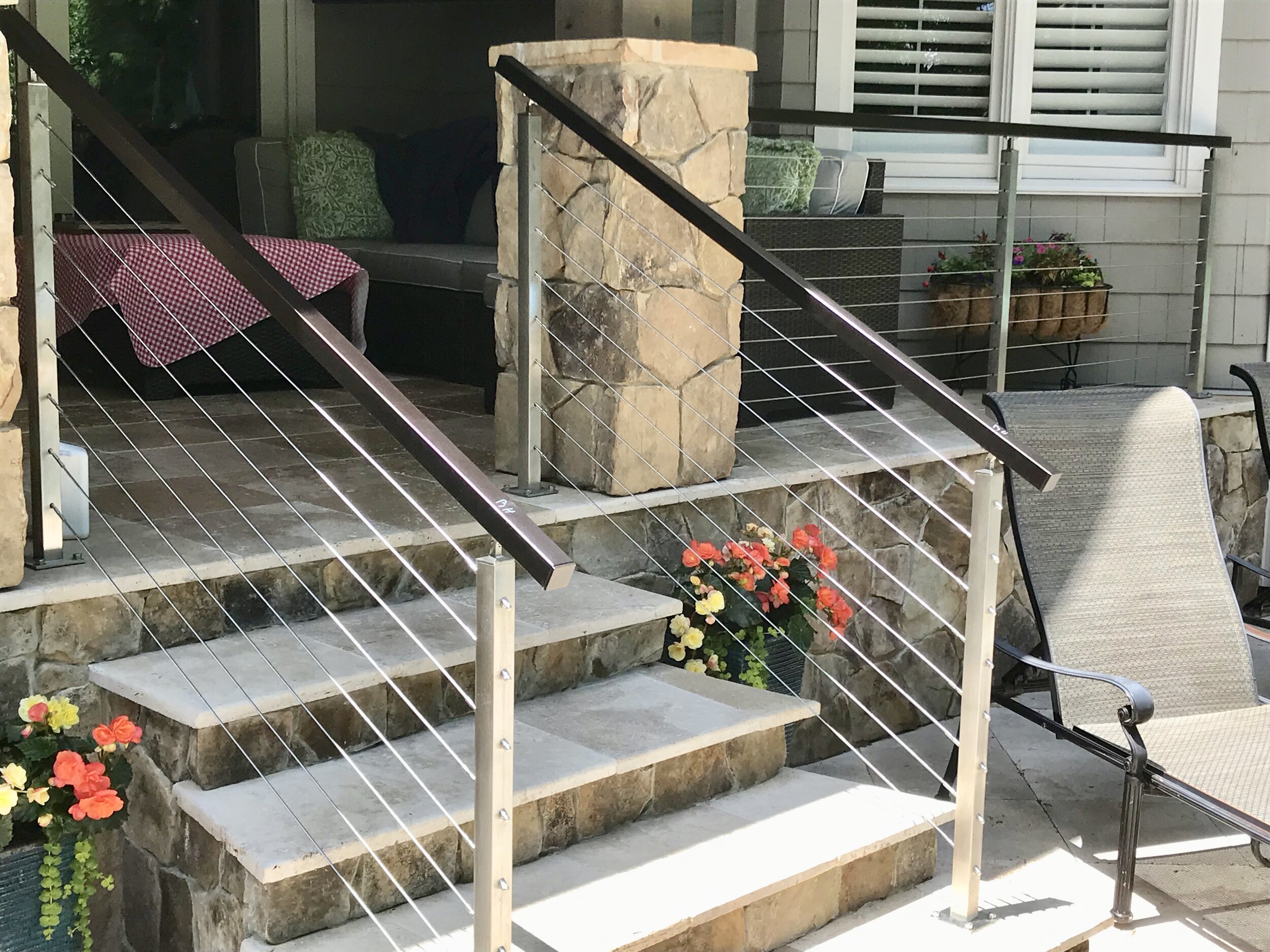
How Do Sun, Rain, and Humidity Affect Railing Finishes?
Weather exposure influences how quickly a railing finish may begin to show signs of wear.
Understanding these effects can help homeowners make better decisions before installation.
Sunlight can affect color and sheen
Ultraviolet radiation can gradually break down certain coating materials.
This may cause fading, gloss loss, or chalking, which appears as a powdery residue on the surface.
Outdoor-rated coatings are formulated to resist these changes more effectively than finishes intended primarily for interior use.
Rain can expose weaknesses in the coating
Rain itself does not automatically damage a properly protected metal railing.
Problems are more likely when water reaches exposed metal through chips, damaged coating areas, or poorly protected connections.
Repeated wetting can increase corrosion risk when moisture remains trapped.
Humidity can contribute to corrosion
High humidity can keep metal surfaces damp, particularly in sheltered areas where moisture takes longer to evaporate.
The risk increases when a coating is damaged or when the base metal is not adequately protected.
Charlotte homeowners should consider all three factors when selecting finishes for exposed porches, balconies, and outdoor staircases.
Which Finishes Hold Their Color Best Over Time?
Color retention depends on the coating formulation, pigments, UV exposure, and application quality.
Exterior-grade polyester powder coatings are commonly chosen for their resistance to sunlight and weathering.
Some high-performance architectural coatings offer additional resistance to fading and gloss loss, although their suitability depends on the railing material and project requirements.
When comparing finishes, consider the following:
Coating formulation: Outdoor-rated products generally provide better weatherability than finishes intended only for interior use.
Color and pigment selection: Different pigments respond differently to UV exposure. A particular color should not be assumed to last longer simply because it is lighter or darker.
Sheen: Glossy, satin, and matte finishes can show aging differently. Gloss loss may be more noticeable on certain surfaces.
Exposure: A railing in full afternoon sunlight may experience more UV-related changes than one beneath a covered porch.
Application quality: Proper surface preparation and coating application influence how well the finish performs over time.
If maintaining a particular color is important, ask about the coating manufacturer's weathering specifications and finish warranty.
A sample can help you evaluate the initial appearance, but long-term performance depends on more than how the coating looks when new.
How Maintenance Needs Differ Indoors vs. Outdoors
All railing finishes benefit from proper care, but the amount of maintenance varies by location.
Indoor railings typically need occasional cleaning and inspection for scratches or worn areas.
Outdoor railings require more attention because dirt, water, and environmental exposure can affect their protective coatings.
Indoor railing maintenance
For most indoor metal railings, maintenance may include:
Removing dust with a soft cloth.
Cleaning fingerprints and marks using products compatible with the finish.
Avoiding abrasive cleaners that could scratch the coating.
Checking frequently touched areas for visible wear.
Following the manufacturer's cleaning recommendations.
Indoor railings generally require less frequent attention unless they are located in particularly humid or high-traffic areas.
Outdoor railing maintenance
Exterior railings should be inspected periodically, especially after severe weather.
Homeowners should look for:
Scratches or chipped coatings
Rust forming around joints or connections
Peeling or blistering paint
Fading or chalking
Dirt or debris collecting in corners
Routine cleaning with a soft cloth, water, and a suitable mild detergent can help remove buildup.
Avoid harsh abrasives and chemicals unless the coating manufacturer specifically permits them.
Any exposed corrosion-prone metal should be assessed and repaired using a compatible coating procedure rather than simply painting over rust.
The required cleaning frequency depends on the location, coating manufacturer's instructions, and amount of exposure.
How to Choose a Finish Based on Railing Location
The most practical way to compare finishes is to consider where the railing will be installed and what conditions it will face.
Railing location
Main priority
What to look for
Indoor staircase
Appearance and daily wear
Durable decorative finish with easy cleaning
Interior landing
Color and design consistency
Finish matching the stair railing
Covered porch
Humidity and occasional rain
Exterior-rated corrosion protection
Open deck
Sun and moisture exposure
UV-resistant, weather-resistant coating system
Outdoor steps
Weather and frequent handling
Durable exterior finish with protected connections
Balcony
Long-term exposure
Coating and metal system suited to site conditions
Consider how exposed the railing will be
A covered porch and an open balcony may both be outdoors, but they do not experience identical conditions.
A railing beneath a roof may receive less direct rain while still being exposed to humidity and condensation.
An exposed balcony railing may receive more sunlight and weather throughout the year.
Match the finish to the railing material
Steel, aluminum, wrought iron, and stainless steel have different corrosion characteristics.
The appropriate surface treatment or coating should be compatible with the selected material.
Think about ongoing maintenance
If you prefer minimal upkeep, ask about finishes designed for prolonged outdoor exposure and their maintenance requirements.
A more decorative finish may be attractive, but it should also be suitable for the location.
Choosing the finish based on real conditions helps avoid paying for unnecessary features or selecting a coating that cannot provide the protection your railing needs.
Metal Railing Finishes in Charlotte, NC
Charlotte's warm summers, rainfall, and seasonal humidity make environmental exposure an important consideration for exterior metal railings.
Homeowners installing railings on porches, decks, balconies, or outdoor steps should consider how often those areas experience direct sunlight and moisture.
For example, a metal railing on an uncovered front staircase may need greater weather resistance than an interior railing beside the main entryway.
Covered outdoor spaces still require suitable corrosion protection because they can experience wind-driven rain, condensation, and humidity.
Indoor projects offer more flexibility with decorative finishes, particularly when the railing is protected from weather.
At Master Fabrication, we help homeowners in Charlotte, NC, and surrounding communities with interior and exterior metal railing projects, wrought iron balusters, and custom railing fabrication.
We can discuss your preferred railing style, installation location, and material options to help you determine which finish requirements should be considered.
Find the Right Railing Finish With Master Fabrication
A railing finish should do more than match your home's style. It should also be appropriate for the material, location, and conditions it will face.
Whether you are updating indoor stair railings or planning an exterior metal railing installation, choosing the right finish early can help reduce maintenance concerns later.
At Master Fabrication, we offer in-person design consultations for custom railing projects. We can help you review available railing options and discuss finish considerations based on your home's needs.
Contact Master Fabrication today to request a consultation for your indoor or outdoor railing project in Charlotte, NC.
FAQs About Indoor and Outdoor Railing Finishes
Can indoor railing finishes be used outdoors?
Not always. Some indoor finishes lack the UV resistance or corrosion protection needed for outdoor exposure. Check whether the coating is rated for exterior use before selecting it for an outdoor railing.
Is powder coating suitable for both indoor and outdoor railings?
Yes, provided the correct powder coating formulation and preparation process are used. Indoor and outdoor powder coatings may have different performance characteristics, particularly regarding UV resistance and weatherability.
Do outdoor metal railings need more maintenance than indoor railings?
Generally, yes. Outdoor railings are exposed to moisture, sunlight, and environmental buildup. Periodic cleaning and inspection help identify coating damage before corrosion becomes more extensive.
What causes outdoor railing finishes to fade?
Sunlight is a major factor. UV exposure can gradually affect pigments and coating binders, leading to color changes, chalking, or gloss loss. The rate depends on coating quality, formulation, and exposure.
Is a matte or glossy finish better for an outdoor railing?
Neither is universally better. Both can work outdoors when the coating is designed for exterior exposure. Matte finishes may conceal certain surface marks, while glossy finishes create a more reflective appearance. Weather resistance depends primarily on the coating system rather than sheen alone.
Can an outdoor railing be refinished if the coating is damaged?
Often, yes. The appropriate repair method depends on the railing material, existing coating, and extent of damage. Minor areas may be repairable, while widespread corrosion or coating failure may require professional surface preparation and refinishing.