
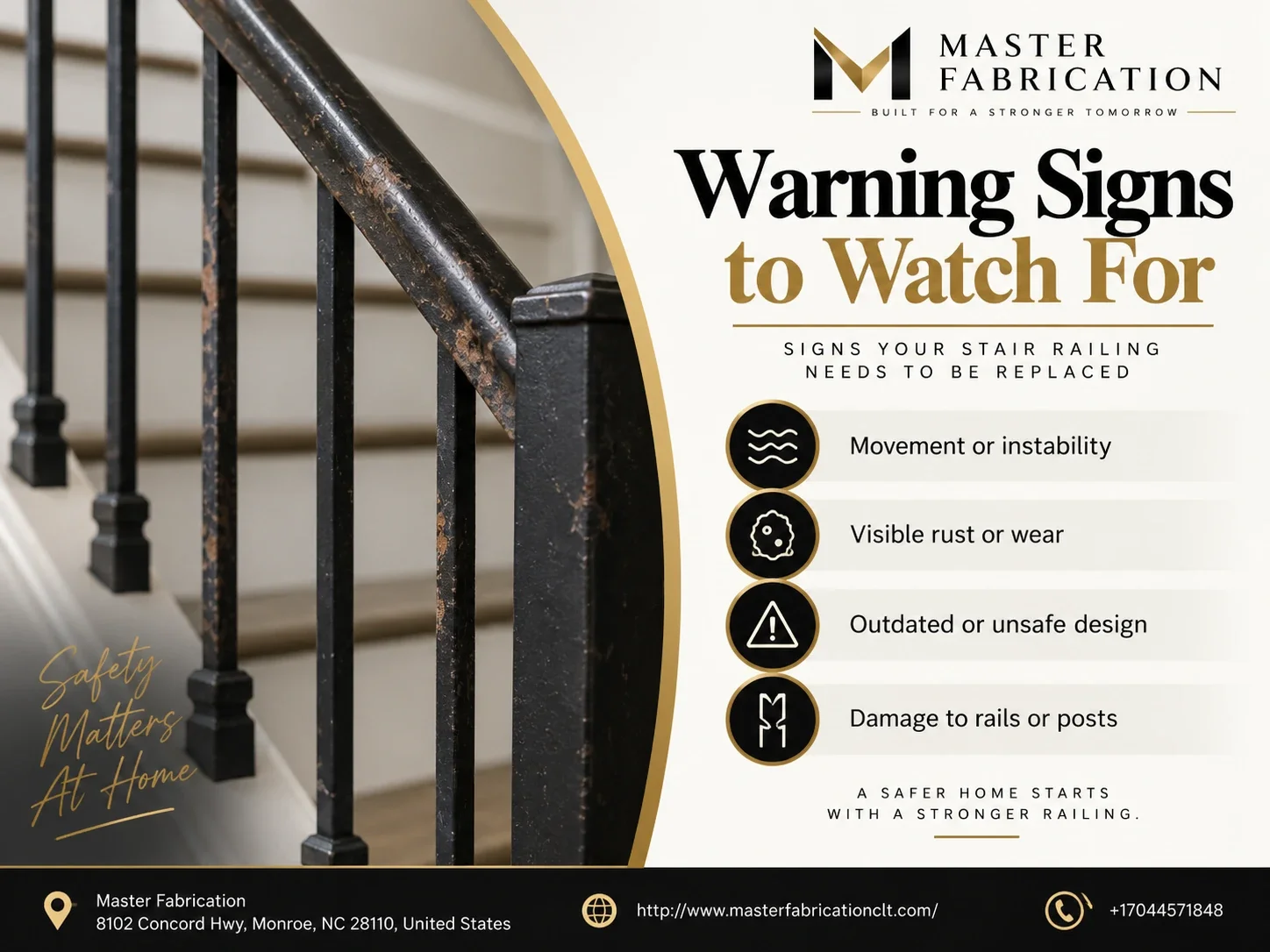
Signs Your Stair Railing Needs to Be Replaced
A stair railing may need to be replaced when it becomes loose, moves under normal use, develops significant corrosion, cracks, separates from its mounting points, or no longer provides dependable support. Some isolated problems can be repaired, but widespread deterioration or structural movement may make full replacement the more practical long-term solution.
Because railings serve an important safety function around stairs, visible damage should not be treated as purely cosmetic. The condition of the posts, connections, mounting surfaces, and overall railing system all matter. Knowing the signs your stair railing needs to be replaced can help you decide when a minor repair is reasonable and when professional evaluation is warranted.
What Are the Signs Your Stair Railing Needs to Be Replaced?
A railing does not necessarily need replacement because of one small scratch or loose decorative component. The bigger concern is deterioration that affects stability or appears throughout the system.
Signs that deserve closer attention include:
Posts that move when pressure is applied
A handrail that feels loose
Sections pulling away from stairs, walls, or floors
Significant rust or corrosion
Cracked or broken components
Bent or distorted metal
Missing or severely damaged connections
Multiple previous repairs
Widespread deterioration
A railing configuration that raises safety concerns
The age of the railing alone does not determine whether it should be replaced. An older railing that remains secure may continue to perform adequately, while a newer railing with damaged mounting points may need attention much sooner.
Look at the railing as a complete assembly rather than focusing only on its appearance.
Why Loose Railing Components Should Not Be Ignored
A stair railing is intended to provide support when someone uses the stairs. Movement can reduce confidence in that support and may indicate problems with the railing itself or how it is attached.
Loose components can result from:
Fasteners working loose
Deteriorated mounting surfaces
Damaged brackets
Cracked welds or connections
Repeated movement over time
Corrosion around attachment points
Improper installation
A single loose fastener may sometimes be corrected without replacing the railing.
The situation becomes more concerning when tightening hardware does not solve the problem or several posts and connections move at the same time.
Repeated movement can also enlarge mounting holes or place additional stress on nearby components. That is why a railing that continually loosens should be evaluated instead of repeatedly tightened without determining the underlying cause.
What Does Structural Movement in a Stair Railing Mean?
Structural movement means the railing, posts, or supporting connections shift more than they should during normal use.
You may notice:
Posts rocking from side to side
The entire railing moving when pushed
Connections separating
Mounting plates lifting
A handrail flexing unusually
Sections becoming misaligned
Movement can originate in the railing itself, but the surrounding structure may also contribute.
For example, a mounting surface may have weakened, or modifications to the staircase may have affected the railing's attachment points.
The location of the movement is important.
One damaged connection may allow for a targeted repair. Movement throughout multiple posts or sections may point to a broader problem that makes replacement worth considering.
Avoid assuming that additional screws or anchors will automatically provide a lasting solution. The reason for the movement should be identified first.
When Rust or Corrosion Becomes a Replacement Concern
Surface rust does not always require railing replacement. Depending on its severity, minor corrosion may sometimes be addressed through proper surface preparation and refinishing.
Corrosion becomes more concerning when it begins affecting the metal itself.
Watch for:
Deep pitting
Flaking metal
Significant material loss
Corrosion around welds
Rust at mounting points
Holes developing in metal components
Sections becoming visibly thinner
Connections weakening
Exterior railings are naturally exposed to more moisture and changing weather conditions, making finish condition particularly important.
Pay close attention to areas where water can collect, including the bottoms of posts, joints, connections, and mounting plates.
If corrosion has progressed beyond the surface and weakened important components, refinishing alone will not restore the lost material. Repair or replacement may then be necessary depending on how much of the railing is affected.
Can Cracks or Other Damage Make a Railing Unsafe?
Yes. Cracks, broken welds, bent components, and damaged connections may affect the railing's ability to function as intended.
Damage can occur because of:
Impact
Corrosion
Repeated movement
Material fatigue
Failed connections
Changes to the surrounding structure
Previous modifications
A small cosmetic defect is different from a crack at a structural connection.
Areas that deserve particular attention include:
Post bases
Welded connections
Handrail connections
Brackets
Mounting plates
Changes in direction
Connections between railing sections
Avoid continuing to use a visibly unstable railing as your primary source of support while waiting for repairs.
A professional can determine whether the damaged component can be repaired effectively or whether the deterioration affects enough of the system to make replacement more appropriate.
When Does an Older Railing Raise Code or Safety Concerns?
Older railings may have been installed under different requirements or may have been modified over the years.
Potential concerns can involve:
Railing height
Openings between components
Handrail configuration
Guarding around elevated areas
Stability
Attachment methods
Missing sections
Building requirements can depend on the location, property type, staircase configuration, project scope, and applicable local rules. For that reason, homeowners should avoid assuming an older railing automatically meets requirements simply because it has been there for many years.
Code considerations become especially relevant during renovations or when an existing railing is being substantially changed.
A railing professional can evaluate the existing configuration and discuss whether replacement provides an opportunity to address current project requirements.
Is an Outdated Railing Design a Reason to Replace It?
It can be, even when the existing railing is still structurally sound.
Stair railings occupy a visually prominent part of many homes. An older design can make an otherwise updated staircase or interior feel dated.
Homeowners may consider replacement when:
Remodeling the staircase
Updating flooring
Changing the home's interior style
Opening up a previously enclosed area
Replacing older decorative elements
Creating a more consistent design throughout the property
A design update is different from a safety-related replacement.
If the current railing is secure and functional, replacement may be primarily an aesthetic decision. This gives homeowners more flexibility to plan the project around a larger renovation.
If the railing is both outdated and deteriorating, replacing it may address appearance and condition at the same time.
Should You Repair or Replace a Damaged Stair Railing?
The decision depends on the extent and cause of the damage.
Repair may make sense when:
Damage is isolated
The main structure remains stable
Only one connection needs attention
Minor surface corrosion is present
Replacement components can be integrated properly
The surrounding mounting surfaces remain sound
Replacement may be more appropriate when:
Multiple posts are loose
Structural movement is widespread
Corrosion has caused significant material loss
Several welds or connections have failed
The railing has undergone repeated repairs
Large sections are damaged
The existing configuration no longer works for the space
Repair would leave other major concerns unresolved
Cost matters, but it should not be the only factor.
Repeatedly repairing a railing with widespread deterioration may ultimately provide less value than replacing the system and addressing the underlying mounting or structural concerns at the same time.
What Should You Consider Before Replacing a Stair Railing?
Before moving ahead with replacement, look at the complete project rather than simply choosing a new railing.
Important considerations include:
Existing Staircase Condition
The contractor should understand what the railing will attach to and whether those surfaces are suitable for the planned installation.
Measurements
Accurate stair angles, dimensions, landings, and mounting locations are especially important for custom fabricated railings.
Removal
Determine whether removal and disposal of the existing railing are included in the project scope.
Surrounding Finishes
Removing an old railing can sometimes expose areas of flooring, drywall, wood, concrete, or other finishes that require additional work.
Project Timing
If the staircase is part of a larger renovation, railing measurements and installation may need to be coordinated with flooring, stair work, painting, or other trades.
Overall Scope
Review what is included in the estimate, including fabrication, finishing, hardware, installation, and cleanup.
These details can prevent surprises once removal or fabrication begins.
How a Professional Railing Assessment Can Help
It is not always obvious whether a railing needs a straightforward repair or complete replacement.
A professional assessment can examine more than the visible damage. Depending on the project, the contractor may evaluate:
Overall railing movement
Post stability
Welds and connections
Corrosion
Mounting points
Handrail condition
Existing materials
Stair dimensions
Surrounding attachment surfaces
Previous repairs
Replacement feasibility
This helps distinguish a localized problem from deterioration affecting the overall railing system.
An assessment is particularly worthwhile when the railing moves under normal use, several components are damaged, corrosion is extensive, or you are already planning a staircase renovation.
Replace Your Stair Railing With Confidence
If your stair railing is loose, damaged, badly corroded, or no longer fits the way you use and update your space, Master Fabrication can help you determine the right next step. We evaluate the existing railing and staircase conditions so the project is based on what is actually happening, not simply on appearance.
When replacement makes sense, our team can help take the project from accurate field measurements and planning through custom fabrication and installation. Contact Master Fabrication to discuss your stair railing project and get a clear estimate based on the scope, condition, and requirements of your space.
FAQs
How do I know if my stair railing is too loose?
A railing should provide dependable support during normal use. If posts rock, mounting points move, or the railing shifts noticeably when pressure is applied, the cause should be investigated.
Can a loose stair railing simply be tightened?
Sometimes. Loose fasteners or a localized connection problem may be repairable. If the railing repeatedly becomes loose or several areas move together, a more complete assessment is appropriate.
Does rust mean a metal railing has to be replaced?
Not necessarily. Minor surface rust may sometimes be treated and refinished. Replacement becomes more likely when corrosion has caused deep pitting, material loss, holes, or weakened structural connections.
Can part of a stair railing be replaced instead of the entire system?
Possibly. Localized damage can sometimes be repaired or a section replaced if the remaining railing is stable and compatible with the repair. Extensive damage may make full replacement more practical.
Should I replace an old railing during a staircase remodel?
It can be a good time to consider it because flooring, stair finishes, walls, or other surrounding elements may already be changing. Replacement also provides an opportunity to coordinate the railing design with the remodeled space.
Does an older railing automatically fail current building requirements?
Not automatically. Requirements vary based on the property, project, location, and type of work being performed. If you are modifying or replacing an older railing, discuss applicable requirements with a qualified professional for your specific project.
Should I replace a railing that has already been repaired several times?
Repeated repairs may indicate that the underlying railing or its connections are deteriorating. If problems continue returning in several locations, comparing the cost and practicality of replacement can make sense.
Who should inspect a damaged metal stair railing?
A contractor or fabricator with relevant railing experience can evaluate the railing, connections, mounting conditions, and extent of visible deterioration. More complex structural concerns may require input from other qualified professionals depending on the situation.