
How to Protect Exterior Railings Around Pools and Waterfront Homes
Living near the water has its advantages, but it also means paying closer attention to the materials around your home. If you have metal railings near a swimming pool, along a waterfront deck, or beside outdoor steps, moisture and chemical exposure can gradually affect their appearance and condition.
Chlorine splashes, salt deposits, humidity, and standing water can all contribute to corrosion when protective finishes become damaged. Fortunately, you do not need complicated maintenance routines to keep your railings in good condition. Choosing suitable materials, addressing moisture buildup, and recognizing early warning signs can help protect your investment.
Quick Answer: How Do You Protect Railings Near Water?
Protecting exterior railings around pools and waterfront homes starts with choosing corrosion-resistant materials, using finishes suited to moisture and chemical exposure, and removing harmful deposits before they accumulate. Regular inspections of posts, joints, fasteners, and coating surfaces can identify early deterioration. Maintenance frequency should depend on the railing material, proximity to water, and actual exposure conditions.
Why Pool and Waterfront Railings Face More Exposure
Exterior railings already experience sunlight, rain, humidity, and temperature changes. When installed near pools or waterfront areas, they may encounter additional moisture and chemical exposure.
A railing beside a swimming pool can receive frequent splashes containing chlorine or dissolved salts. A waterfront railing may experience wind-driven rain, condensation, and prolonged dampness around mounting points.
Several conditions can increase the risk of deterioration:
Frequent splashing: Water repeatedly reaches posts, handrails, and connecting hardware.
Chemical exposure: Pool water and concentrated treatment chemicals can affect some metals and finishes.
Moisture retention: Shaded areas and narrow connections may remain wet longer.
Sunlight: UV exposure can gradually affect coating color and appearance.
Standing water: Poor drainage can keep moisture against post bases and mounting plates.
The amount of exposure matters.
For example, a railing several feet away from a swimming pool may experience different conditions from one installed directly beside the water.
Similarly, a covered waterfront porch railing may remain relatively protected from rain but still experience humidity and condensation.
The goal is to identify the conditions affecting your specific installation rather than assume every outdoor railing needs the same level of protection.
How Chlorine Can Affect Exterior Metal Railings
Chlorine is commonly used to sanitize swimming pool water, but repeated exposure to pool water or concentrated chemicals can affect certain railing materials.
This does not mean ordinary pool water will immediately damage a properly finished metal railing.
Problems become more likely when chemical residues remain on surfaces, protective coatings are compromised, or concentrated treatment products contact the metal.
Pool splashes can leave deposits
When pool water splashes onto a railing, some moisture eventually evaporates.
Dissolved minerals and chemical residues may remain on the surface, particularly around joints, fasteners, and textured finishes.
Over time, these deposits can contribute to staining or corrosion under certain conditions.
Damaged coatings expose vulnerable metal
Steel and wrought iron railings rely on suitable protective finishes to help prevent corrosion.
If the coating becomes chipped or scratched, moisture and chemical deposits may reach the underlying metal.
Small areas of corrosion can then spread if the damage is left unaddressed.
Concentrated pool chemicals require extra care
Undiluted chlorine products, acid-based pool treatments, and certain cleaning chemicals can be particularly aggressive toward metal surfaces.
Avoid storing or handling these products where spills can contact railing components.
If accidental contact occurs, follow the product's safety instructions and the railing manufacturer's recommendations for cleanup.
Keeping pool chemicals properly managed helps protect both the railing and surrounding surfaces.
Can Salt and Moisture Increase Corrosion Risk?
Yes. Salt and moisture together can create conditions that accelerate corrosion on certain metals.
Salt-containing water conducts electricity more readily than pure water, supporting electrochemical reactions that can damage susceptible metal surfaces.
However, the source of the salt matters.
Saltwater swimming pools
Saltwater pools use dissolved salt and a chlorine generator to produce sanitizer.
Although their salt concentration is typically much lower than seawater, the dissolved chlorides can still contribute to corrosion under unfavorable conditions.
Metal railings near these pools should be selected and maintained with this exposure in mind.
Freshwater waterfront properties
Homes around Lake Norman are located beside a freshwater lake, not a saltwater coastline.
This is an important distinction.
Lakefront railings are not automatically exposed to the same airborne salt conditions found in coastal environments.
However, freshwater exposure can still contribute to corrosion when steel or iron surfaces remain wet, finishes become damaged, or moisture collects around connections.
Dissimilar metal connections
Corrosion can also occur when different metals are electrically connected in the presence of moisture.
For example, certain combinations of aluminum components and incompatible fasteners may create conditions for galvanic corrosion.
Proper material compatibility, connection design, and suitable protective measures help reduce this risk.
Which Railing Materials Handle High-Moisture Areas Well?
The material used for your railing influences how it responds to water, chemical exposure, and long-term outdoor conditions.
No material is completely maintenance-free, but some offer better corrosion resistance than others.
Aluminum railings
Aluminum does not develop the reddish-brown rust associated with steel.
This makes it a practical option for many outdoor installations, including areas exposed to frequent moisture.
However, aluminum can still corrode, particularly where coatings are damaged or incompatible metal connections are present.
A suitable finish and properly selected hardware remain important.
Stainless steel railings
Stainless steel offers good corrosion resistance when the correct grade and surface finish are selected.
However, stainless steel is not immune to staining, pitting, or other forms of corrosion.
Poolside environments may require particular attention to chloride exposure, material grade, and maintenance access.
Homeowners should confirm that the specified stainless steel components are appropriate for their actual installation conditions.
Wrought iron and steel railings
Wrought iron and steel can provide strength and decorative flexibility for exterior railings.
However, they require adequate corrosion protection.
Exterior-grade coatings, suitable surface preparation, and proper treatment of welded connections are especially important near water.
These materials can perform well when the protective system is appropriate and maintained.
Which material should you choose?
Consider the type of water exposure, railing location, desired appearance, budget, and maintenance expectations.
A railing near a residential pool may have different requirements from one installed on a waterfront dock or elevated deck.
The complete railing system matters, including its posts, mounting hardware, fasteners, and protective finish.
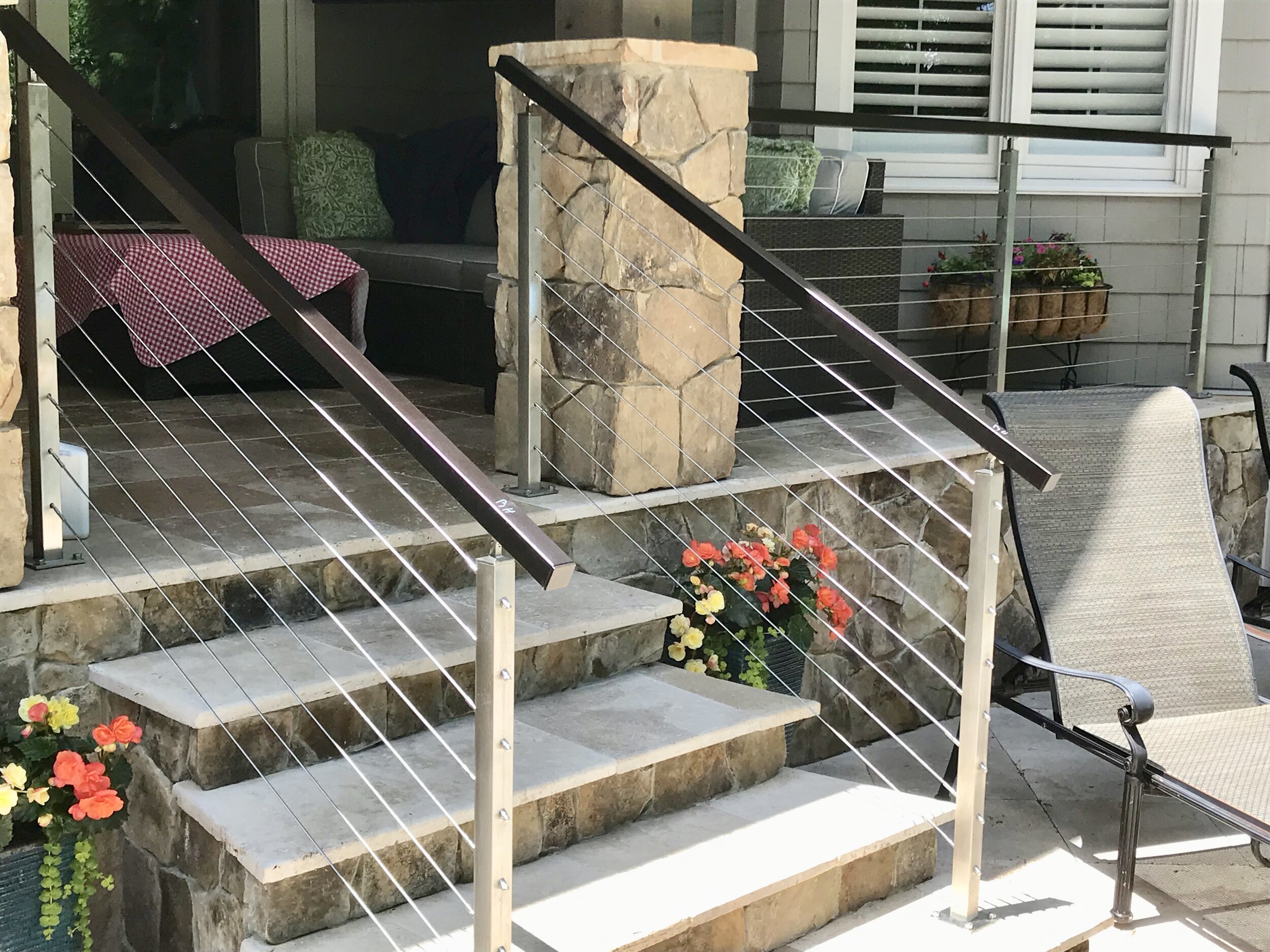
How Finish Selection Affects Long-Term Protection
A railing's finish helps protect the underlying material from environmental exposure.
For railings installed near pools or waterfront areas, finish selection should account for moisture, UV exposure, and potential contact with pool chemicals.
Exterior-grade powder coating is one option for compatible metal railings.
When properly specified and applied over suitable surface preparation, it can provide a durable protective barrier and good weather resistance.
Protective paint systems may also be appropriate, particularly when compatible primers and topcoats are selected for the metal.
Some steel railing systems may benefit from galvanizing or additional corrosion-protection treatments.
However, the finish alone does not determine long-term performance.
Surface preparation, coating application, material compatibility, and drainage all influence durability.
Pay particular attention to welded joints, exposed edges, and mounting locations.
These areas can become vulnerable if the coating does not provide adequate protection or becomes damaged during installation.
When planning a railing near water, ask whether the proposed finish is suitable for the expected exposure rather than choosing based on color alone.
How Often Should Exterior Railings Be Cleaned?
There is no universal cleaning schedule for every poolside or waterfront railing.
A railing that receives daily pool splashes may need more attention than one installed farther from the water.
The appropriate frequency depends on the material, finish, environmental conditions, and manufacturer's maintenance recommendations.
Clean when deposits begin accumulating
Pool water, dirt, pollen, and other environmental residues can collect on railing surfaces.
Removing these deposits helps reduce the amount of time potentially harmful substances remain against the finish.
For many compatible railing finishes, gentle cleaning with fresh water, mild detergent, and a soft cloth or sponge is appropriate.
Always confirm the cleaning method with the coating or railing manufacturer.
Rinse away pool water and chemical residues
Where the manufacturer permits, rinsing accessible surfaces with fresh water can help remove chloride-containing residues left by pool splashes.
Allow the railing to drain and dry naturally.
Avoid using high-pressure washing equipment directly against damaged coatings or vulnerable connections.
Avoid aggressive cleaning products
Abrasive pads, wire brushes, and harsh chemical cleaners can damage certain protective finishes.
Some products containing bleach, strong acids, or chlorides may also be unsuitable for stainless steel.
Using an inappropriate cleaner can create more problems than the original dirt or staining.
Adjust maintenance to actual exposure
If your railing is close to frequently used pool steps, inspect it for residue more often.
For a sheltered waterfront railing with little direct splashing, maintenance may be less demanding.
Pay attention to visible buildup and changes in the finish rather than relying on a rigid calendar.
What Areas Should Be Checked During Routine Inspections?
A railing can appear perfectly fine along its handrail while developing corrosion around less visible connections.
Routine inspections should focus on locations where moisture and deposits are more likely to remain.
Important areas include:
Post bases and mounting plates: Look for staining, trapped moisture, or coating damage where the railing attaches to the deck, concrete, or stairs.
Fasteners and hardware: Check for discoloration, visible corrosion, or loose components.
Welded connections: Look for rust spots, cracks in the protective coating, or changes around welded joints.
Horizontal surfaces: Examine areas where water or chemical deposits may collect instead of draining away.
Undersides of railing sections: These surfaces are often overlooked during cleaning and may remain damp.
Connections between different materials: Pay attention to unusual staining or corrosion where dissimilar metals meet.
Decorative details: Ornamental patterns and narrow spaces can trap debris and moisture.
For poolside installations, pay extra attention to surfaces that receive frequent splashes.
For waterfront decks, examine posts and connections near areas with poor drainage or consistent shade.
A visual inspection from a safe position can reveal many common warning signs. Avoid leaning on railings that appear loose or deteriorated.
What Signs Suggest the Railing Needs Professional Attention?
Some signs of deterioration are mainly cosmetic, while others may indicate that the railing needs repair or replacement.
Knowing the difference can help you respond appropriately.
Rust that continues spreading
A small rust spot on a steel railing may begin where the protective coating has been damaged.
If the affected area expands or corrosion repeatedly returns, the underlying condition should be assessed.
Peeling or blistering finishes
Coatings that bubble, crack, or peel may no longer provide adequate protection.
Simply painting over the damaged area may not resolve corrosion beneath the surface.
Pitting or unusual staining
Small pits, localized discoloration, or persistent brown staining on stainless steel or aluminum components can indicate corrosion-related problems.
The appropriate treatment depends on the metal and extent of damage.
Loose posts or unstable connections
Movement around railing posts, brackets, or mounting hardware deserves immediate attention.
A railing should not be used for support when its connections appear compromised.
Cracks or damaged structural components
Visible cracks, broken welds, or significant deterioration require professional evaluation.
These conditions should not be treated as routine cleaning issues.
If you notice structural damage, limit access to the affected area until the railing can be assessed.
Exterior Railings for Lake Norman Homes
Waterfront homes around Lake Norman often feature outdoor living areas where railings provide safety while preserving views of the water.
Decks, balconies, porches, docks, and exterior staircases may all require railing systems appropriate for their surroundings.
Because Lake Norman is a freshwater lake, the main environmental considerations differ from those of oceanfront properties.
Moisture from rainfall, lake splashes, condensation, and seasonal humidity can still affect exterior metal components.
The amount of exposure depends on the installation location.
For example, a railing along an uncovered dock walkway may experience more frequent wetting than one beneath a covered lakefront porch.
Similarly, railings near a backyard swimming pool may encounter chlorine or salt-containing pool water that other lakefront railings do not.
When selecting a railing system, homeowners should consider:
Whether the railing is exposed to frequent splashing
How quickly water drains from surrounding surfaces
The compatibility of the material, finish, and hardware
How easily the railing can be inspected and maintained
The desired appearance and view of the surrounding landscape
A properly planned railing should accommodate both the property's design and its environmental conditions.
Plan Your Waterfront Railing Project With Master Fabrication
At Master Fabrication, we provide custom exterior metal railing services for homeowners in Charlotte, NC, and surrounding areas.
Our work includes wrought iron railings, aluminum railing options, cable railing systems, and custom railing fabrication for outdoor spaces.
For properties near pools or waterfront areas, we can help you explore railing designs and material considerations based on the installation location.
We also offer in-person design consultations to discuss measurements, layout, and available railing options.
Whether you are planning a new railing for your lakefront deck, replacing an aging porch railing, or exploring options for an outdoor staircase, we can help you determine the next steps.
Contact Master Fabrication today to request a consultation for your exterior railing project.
FAQs About Pool and Waterfront Railing Maintenance
Can chlorine damage powder-coated metal railings?
Repeated exposure to pool water or concentrated chlorine products may affect some coatings, particularly if the finish is damaged or unsuitable for the environment. A properly specified exterior coating and appropriate maintenance can help reduce deterioration.
Are saltwater pools harder on metal railings?
Saltwater pools contain dissolved chlorides that can contribute to corrosion under certain conditions. Material selection, coating protection, compatible hardware, and removal of deposits become particularly important around these pools.
Do lakefront railings need the same protection as coastal railings?
Not necessarily. Freshwater lakefront properties generally do not experience the same marine salt exposure as coastal homes. However, humidity, rainfall, repeated splashing, and standing water can still contribute to corrosion.
Is stainless steel completely rustproof around swimming pools?
No. Stainless steel resists corrosion but can still develop staining, pitting, or other deterioration. The material grade, surface finish, pool chemistry, exposure conditions, and maintenance practices all affect its performance.
Can I rinse my poolside metal railing with fresh water?
In many cases, yes. Fresh-water rinsing can help remove pool water and chemical residues. Use the cleaning method recommended for your railing's material and finish, and avoid allowing water to remain trapped around connections.
When should a waterfront railing be replaced instead of repaired?
Replacement may be appropriate when corrosion has significantly weakened structural components, mounting connections are deteriorated, or repairs cannot restore safe performance. A professional inspection can help determine whether repair or replacement is the better option.