
How to Update a 1990s Staircase Without Rebuilding the Stairs
A 1990s staircase can often be updated without removing and rebuilding the entire stair structure. Replacing dated balusters, refinishing wood, updating the handrail, modifying newel posts, and coordinating the staircase with newer flooring and paint can dramatically change how the space looks.
For many homeowners, the staircase itself is still structurally sound. The problem is the visible design around it. Honey-colored oak, bulky wood balusters, glossy finishes, ornate newel posts, and dated carpet can make an otherwise renovated home feel stuck several decades behind.
At Master Fabrication, we look at staircase renovations by separating what still works from what is making the staircase appear outdated. That approach can preserve good structural components while directing the renovation budget toward the elements that make the largest visual difference.
What Makes a 1990s Staircase Look Dated?
There is rarely one individual feature that makes a staircase look old. Usually, several design choices from the same period appear together.
Common features include:
Honey or orange-toned oak
Thick turned wood balusters
Highly decorative newel posts
Glossy polyurethane finishes
Carpeted stair treads
White carpet runners
Rounded handrail profiles
Heavy wood railing systems
Brass-colored hardware
Strong red, yellow, or orange wood undertones
Dark or traditional wall colors around the stairwell
These materials were common in homes built or renovated during the 1980s and 1990s. There is nothing inherently wrong with them, but they can clash with today's cleaner flooring, cabinetry, lighting, and interior finishes.
A staircase can become especially noticeable after surrounding rooms have been renovated.
For example, homeowners may install wide-plank flooring, neutral wall colors, updated trim, and contemporary lighting only to discover that their original oak staircase suddenly becomes one of the most visually dated elements in the house.
That does not necessarily mean the stairs need to be rebuilt.
It usually means the visible components need to be reconsidered.
Which Parts of the Existing Staircase Can Usually Stay?
Before demolition begins, it helps to distinguish between the staircase structure and its decorative components.
The underlying staircase may include:
Stringers
Structural framing
Risers
Treads
Landings
Floor connections
Supporting walls
If those elements are structurally sound, correctly positioned, and appropriate for the home's layout, there may be little reason to replace them.
Instead, renovation can focus on the railing system and finishes.
Components That May Be Reusable
Depending on their condition and the design of the renovation, homeowners may be able to preserve:
Stair framing: The structural framing beneath the staircase frequently remains untouched during cosmetic renovations.
Existing treads: Quality hardwood treads may simply need sanding and refinishing.
Risers: Existing risers can sometimes be repaired, painted, refinished, or covered.
Handrails: Some wood handrails can be refinished rather than replaced if the profile still works with the intended design.
Newel post cores: In some projects, portions of the existing newel structure can remain while the visible design is modified.
Preserving usable components can reduce unnecessary demolition and keep a staircase renovation focused.
However, condition matters. Loose treads, movement in the railing, cracked framing, excessive squeaking, water damage, or other structural concerns should be evaluated before cosmetic work begins.
How Replacing Balusters Can Change the Entire Look
Balusters occupy a large amount of visual space along a staircase, which makes them one of the most effective components to update.
A traditional 1990s railing may include thick turned wood balusters positioned beneath an equally substantial wood handrail.
Replacing those balusters can immediately make the staircase feel lighter and more current.
Switching From Wood to Metal Balusters
Metal balusters can create a cleaner visual line without requiring the staircase itself to change.
Depending on the home's design, homeowners may choose:
Straight iron balusters
Square metal balusters
Minimal geometric profiles
Alternating decorative and plain balusters
Custom fabricated railing components
A simpler baluster design generally produces a more contemporary result.
In transitional interiors, metal balusters can also provide contrast between traditional wood components and modern surrounding finishes.
Avoid Overdesigning the New Railing
A staircase does not automatically become modern just because wood balusters are replaced with metal ones.
Excessively decorative scrollwork, baskets, twists, or multiple competing baluster patterns can create another style that eventually feels dated.
For homeowners looking for a longer-lasting update, simpler patterns often integrate more easily with future flooring, wall colors, cabinetry, and furniture.
The spacing and dimensions of replacement balusters also need to work with the existing railing system and applicable safety requirements.
When Should You Update the Handrail?
Replacing balusters while keeping the original handrail can work in some homes.
In others, the handrail itself is one of the features making the staircase look dated.
Large rounded handrails and highly sculpted wood profiles were common in previous decades. These shapes can feel especially heavy when paired with newer minimalist interiors.
Consider replacing the handrail when:
Its profile looks noticeably outdated
The wood is badly damaged
It does not coordinate with the new balusters
Its proportions overwhelm the staircase
The railing configuration is being substantially changed
The homeowner wants a more streamlined design
A simpler wood profile can create a substantial visual improvement without eliminating wood entirely.
Wood and Metal Can Work Together
Modernizing a staircase does not mean every component has to match.
A wood handrail paired with metal balusters is one of the most versatile combinations because it allows homeowners to retain warmth while reducing visual bulk.
The wood can then coordinate with flooring, cabinetry, furniture, or architectural trim elsewhere in the home.
How New Wood Finishes Can Modernize the Staircase
Wood color has a major influence on how old or new a staircase feels.
Many homes built during the 1990s contain red oak or similar wood with yellow, orange, or reddish finishes.
Sometimes the wood itself is not the problem.
The stain is.
Removing an older finish and applying a different stain can completely change the character of the staircase.
Consider the Undertones
When selecting a new stain, look at the undertones in the flooring and surrounding woodwork.
For example, placing a strongly orange staircase beside cooler brown flooring can make both finishes look disconnected.
Possible approaches include:
Natural wood tones
Medium neutral browns
Dark brown stains
Muted stains that reduce red or orange undertones
Painted components combined with stained treads
Samples are important because the same stain can look very different on different wood species.
Avoid Trying to Force an Exact Flooring Match
One common renovation mistake is attempting to make every wood surface exactly the same color.
An exact match is often difficult, especially when the staircase and flooring are different species, ages, or finishes.
Complementary tones can look more intentional than an almost-matching stain that is noticeably different under natural light.
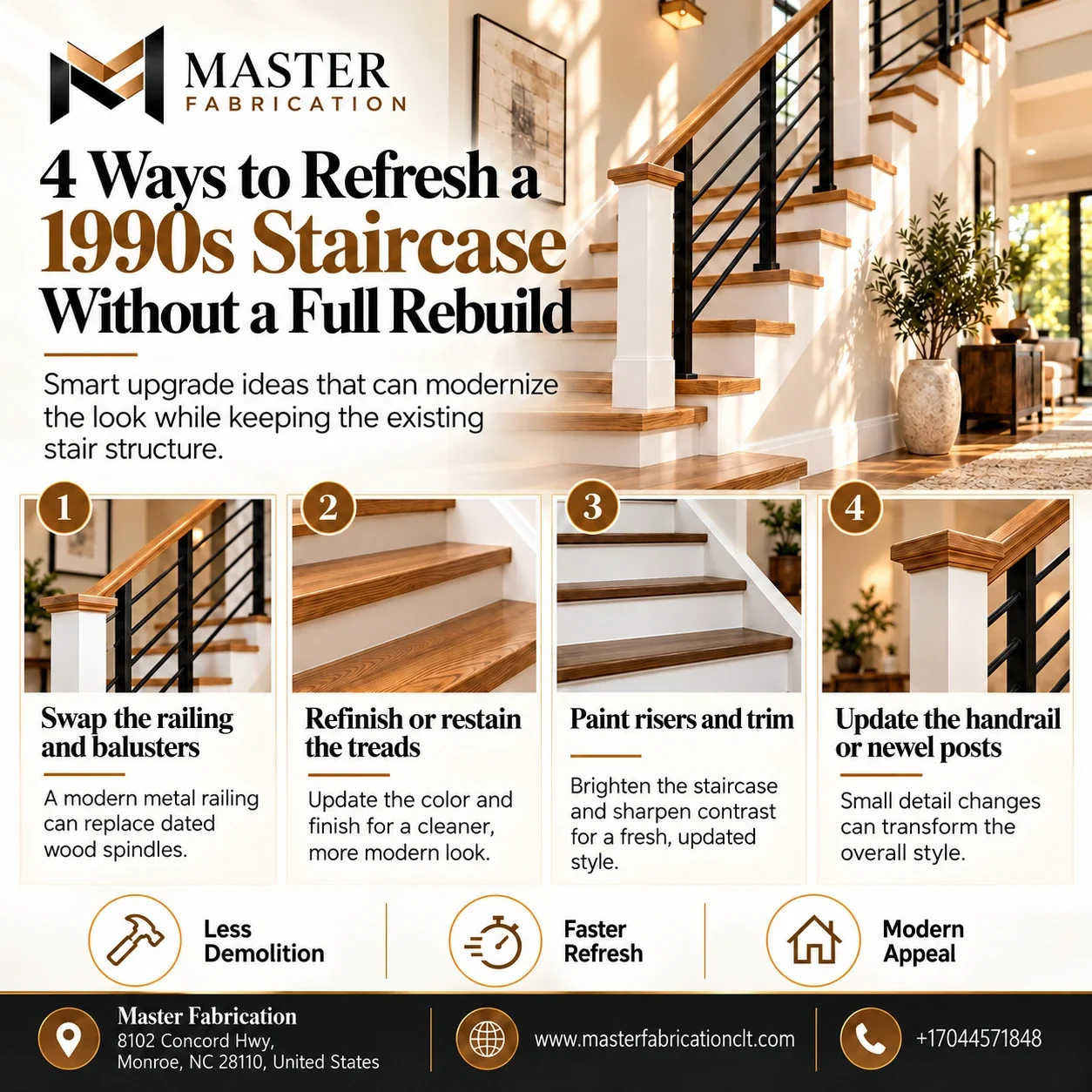
Can Newel Posts Be Updated Without Rebuilding the Stairs?
Often, yes.
Newel posts are the larger vertical posts positioned at important points in the railing system, such as the bottom of the staircase, landings, and turns.
Because they are much larger than individual balusters, they strongly influence the overall style.
A heavily turned or carved 1990s newel post can make an otherwise updated staircase still appear traditional.
Depending on its construction, a newel post may be:
Replaced
Modified
Wrapped
Refinished
Simplified with new trim
Incorporated into a new railing design
Do Not Treat the Newel Post as Purely Decorative
Unlike some trim components, newel posts can play an important role in stabilizing the railing.
Removing one without understanding how it is attached can create movement in the railing system.
For that reason, updating a newel post should account for both appearance and structural support.
A modern newel should not only look better. It should also provide a secure connection for the handrail and surrounding railing components.
How to Coordinate the Staircase With Updated Flooring and Paint
The staircase should feel connected to the room around it rather than appearing like a completely separate renovation.
Start by looking at the largest surrounding finishes.
These usually include:
Flooring
Wall color
Baseboards
Door trim
Cabinetry
Furniture
Light fixtures
Metal hardware
The goal is not necessarily to duplicate every finish. Instead, the staircase should repeat enough materials, colors, or shapes to feel intentional.
Coordinating With Hardwood or Luxury Vinyl Flooring
If new flooring runs near the staircase, pay attention to the difference between the floor and stair tread colors.
The two finishes may coordinate without being identical.
If the flooring is light and neutral, a slightly darker wood handrail can provide useful contrast.
If the flooring is dark, homeowners may prefer lighter painted risers or simpler balusters so the staircase does not appear overly heavy.
Using Paint Strategically
Paint can be one of the most cost-effective staircase updates.
Depending on the design, homeowners might paint:
Risers
Stringers
Newel posts
Portions of the railing
Trim around the stairs
White and other neutral finishes can brighten a staircase and create contrast against stained wood treads.
However, painted surfaces receive significant wear around staircases, so preparation and durable finishing materials are important.
Which Upgrades Make the Biggest Visual Difference?
Not every part of the staircase needs to change equally.
For homeowners working with an existing 1990s staircase, several improvements tend to make an especially noticeable difference.
1. Replace Dated Balusters
Balusters are visible across most of the railing system. Changing them can transform the staircase without altering its footprint.
2. Change the Wood Color
Removing an orange or yellow-toned finish can immediately make older wood feel more compatible with today's interiors.
3. Simplify the Handrail
A cleaner handrail profile can make the entire railing system feel less bulky.
4. Update the Newel Posts
Large traditional newels can dominate the design. Simplifying them can dramatically change the staircase's character.
5. Remove Dated Carpet
If the underlying staircase allows it, replacing old carpet with finished wood treads or a more contemporary runner can make a significant difference.
6. Update Nearby Lighting
A staircase renovation sometimes appears incomplete because an outdated chandelier or flush-mount fixture remains above it.
New lighting can help reinforce the updated design.
How to Prioritize Staircase Updates on a Budget
A staircase renovation does not have to happen all at once.
Homeowners can prioritize work according to what is most visible and what is most practical to change.
Start With Safety and Condition
Before budgeting for cosmetic improvements, inspect the staircase for:
Loose railings
Wobbly newel posts
Damaged balusters
Loose treads
Cracked wood
Significant movement
Water damage
Structural deterioration
Necessary repairs should come before decorative changes.
Identify the Most Dated Feature
Stand across the room and look at the staircase as a whole.
What draws attention first?
If it is the orange oak, refinishing may provide the biggest improvement.
If it is a wall of turned wood balusters, replacing the balusters may be the better starting point.
If the newel posts dominate the staircase, simplifying them could change the overall appearance more effectively than replacing smaller components.
Reuse Quality Materials
Solid hardwood should not automatically be discarded because the finish is dated.
Refinishing good material can preserve quality while producing a completely different appearance.
Similarly, an existing handrail may work perfectly well after sanding and staining if its shape already suits the new design.
Spend Where the Change Is Most Visible
A renovation budget can disappear quickly when every component is replaced unnecessarily.
Prioritize the areas homeowners see most often, particularly:
Main railing runs
Entry-facing newel posts
Handrails
Stair treads
Balusters
Less visible components can sometimes remain largely unchanged.
When Does a Staircase Need More Than a Cosmetic Update?
Not every staircase is a candidate for a cosmetic renovation.
There are situations where more extensive work may be appropriate.
Structural Movement
If the staircase moves, shifts, or feels unstable under normal use, the underlying framing or connections may need attention.
Significant Water or Pest Damage
Water intrusion, rot, or pest damage can compromise components that might otherwise appear reusable.
Major Layout Changes
A homeowner who wants to relocate the staircase, change its direction, open enclosed walls, or significantly modify landings is dealing with more than a cosmetic renovation.
Safety or Code Concerns
Older staircases may contain dimensions, railing configurations, openings, or other features that need to be evaluated when significant remodeling work is planned.
Requirements can vary by project and jurisdiction, so homeowners should verify what applies before modifying structural or safety-related components.
Severely Damaged Treads or Stringers
Cosmetic improvements cannot solve serious deterioration in the parts supporting the stairs.
Structural issues should be addressed before new railing components or finishes are installed.
The important distinction is that a dated staircase and a failing staircase are not the same thing.
A staircase can look 30 years old while remaining structurally useful for decades to come. Evaluating the structure first makes it easier to decide how much renovation is actually necessary.
FAQs
Can You Modernize a 1990s Staircase Without Replacing It?
Yes. If the existing staircase is structurally sound, homeowners can often modernize it by replacing balusters, refinishing wood, updating newel posts, changing the handrail, painting selected components, and replacing outdated carpet or finishes.
What Is the Easiest Way to Make an Old Staircase Look Modern?
Replacing visually heavy balusters with simpler designs and changing dated wood finishes are often among the most noticeable improvements. The best option depends on which existing component dominates the staircase visually.
Can You Replace Wood Balusters With Metal Balusters?
In many staircase configurations, wood balusters can be replaced with metal ones while keeping portions of the existing railing system. Proper spacing, installation, and compatibility with the handrail and stair structure still need to be considered.
Should Stair Treads Match the Flooring?
They do not necessarily need to match exactly. Coordinating undertones and overall warmth is usually more important than forcing an exact color match between different wood species or flooring materials.
Can You Keep an Existing Handrail When Replacing Balusters?
Potentially. If the handrail is structurally sound and its profile works with the new design, refinishing it may be more practical than replacing it. A particularly bulky or dated profile may still be worth updating.
How Do You Know Whether a Staircase Needs Structural Work?
Movement, loose treads, unstable railings, damaged framing, rot, significant cracking, or deterioration can indicate that the project involves more than cosmetic updates. These conditions should be evaluated before decorative renovation begins.
A 1990s staircase does not automatically need to come out simply because the surrounding home has changed. In many cases, its structure can remain while the visible railing components, wood finishes, treads, and details are redesigned around a more current interior.
At Master Fabrication, we focus on the components that can make the strongest visual difference while working with the existing staircase wherever practical. Updating metalwork, balusters, railing elements, and related fabricated components can create a staircase that feels intentionally connected to the rest of the renovation without starting over unnecessarily.
The best staircase update begins by determining what is worth preserving, what is making the space feel dated, and which changes will produce the most noticeable improvement.