
Minimalist Stair Railing Ideas That Still Feel Warm
The best minimalist stair railing ideas combine simple lines and open profiles with materials that keep the space from feeling cold or unfinished. Wood handrails, warm metal finishes, restrained baluster patterns, and thoughtfully chosen colors can give a staircase a clean look while preserving the warmth homeowners want in an everyday living space.
Minimalism does not have to mean stark white walls, exposed steel, or an industrial-looking staircase. At Master Fabrication, we look at how railing materials, proportions, finishes, flooring, and surrounding furniture work together. A well-designed minimalist railing should feel intentional and quiet while still contributing texture, warmth, and character to the home.
What Makes a Stair Railing Feel Minimalist?
A minimalist stair railing usually relies on simplicity rather than decoration.
The design has a clear structure, limited materials, and enough open space for the individual components to feel deliberate. Instead of multiple ornamental elements competing for attention, the railing typically uses one consistent visual idea.
Common characteristics include:
Straight, clean profiles
Simple handrail shapes
Limited decorative detailing
Repeated baluster patterns
Open sightlines
Slim metal components
Natural wood accents
A restrained color palette
Consistent spacing
Simple connections and transitions
Minimalism is not necessarily about using the fewest possible components. Stair railings still need to satisfy structural and safety requirements.
The goal is to avoid unnecessary visual complexity.
Keep the Silhouette Simple
Look at the railing from across the room rather than focusing immediately on individual details.
A minimalist railing should usually create a clean overall outline.
For example, a straight wood handrail supported by evenly spaced black metal balusters can create a clear, easy-to-understand form.
Cable railing can produce a similarly clean effect through long horizontal lines.
More elaborate systems may include decorative pieces, but they are usually used sparingly rather than repeated throughout every railing section.
Let Repetition Create the Design
Simple repetition is one of the easiest ways to create visual interest without relying on ornament.
A row of identical vertical balusters can look sophisticated because the spacing itself becomes part of the design.
The same principle applies to horizontal cables or geometric metal bars.
The eye notices rhythm and proportion rather than individual decorative pieces.
This keeps the railing understated while still making it feel intentionally designed.
How to Keep a Minimalist Railing From Feeling Cold
A minimalist interior can begin to feel cold when too many hard, dark, or highly polished materials are combined without warmth or texture.
Fortunately, keeping a railing simple does not require removing every warm element.
The right material combinations can soften the overall appearance while preserving the clean aesthetic.
Introduce Natural Materials
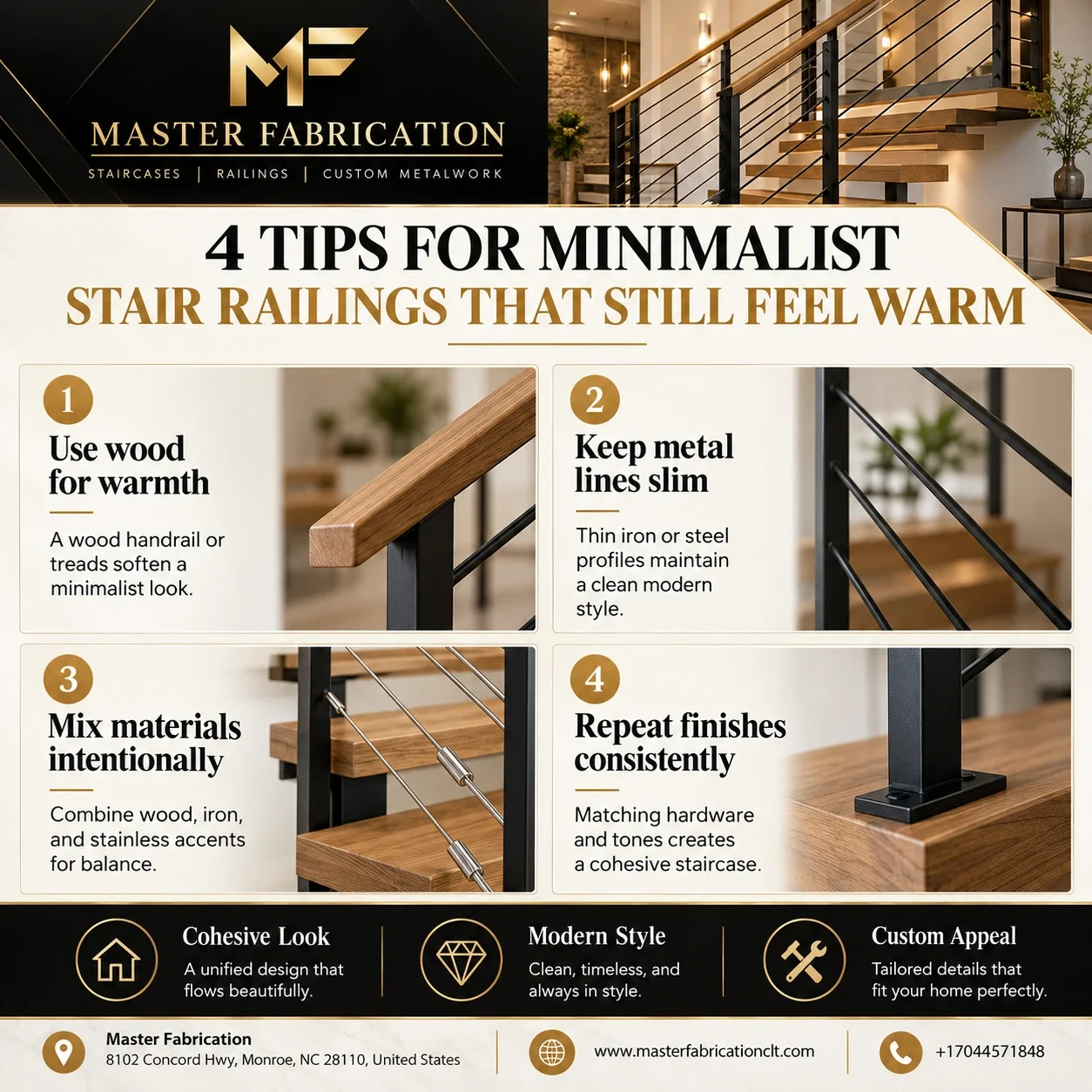
Wood is one of the most effective ways to add warmth to a minimalist staircase.
A wood handrail can soften black metal, stainless steel, or cable railing without disrupting the simplicity of the design.
The wood grain introduces natural variation that contrasts with the precision of fabricated metal.
Use Texture Instead of Ornament
Warmth does not always need to come from decorative patterns.
Texture can provide interest in a quieter way.
For example:
Natural wood grain
Brushed metal
Soft matte finishes
Textured flooring
Woven rugs
Plaster or lightly textured walls
These materials create visual depth without making the staircase look busy.
Avoid Making Everything Black, White, and Gray
Neutral palettes work well in minimalist homes, but relying entirely on cool neutrals can sometimes create a stark appearance.
Even a small amount of warm wood or warmer wall color can change the atmosphere.
A black metal railing, for example, may feel much more inviting when paired with oak treads and warm white walls than when surrounded by cool gray flooring and bright white finishes.
Think About Lighting
Warm lighting can also affect how a railing feels.
A simple metal-and-wood railing illuminated by soft wall sconces or warm overhead lighting can appear much more comfortable than the same railing under harsh, cool lighting.
The railing should be considered as part of the overall room rather than as an isolated feature.
Why Wood Works Well With Minimalist Railing Designs
Wood works especially well in minimalist railings because it offers visual warmth without requiring additional decoration.
Its natural grain gives the staircase character while allowing the railing profile itself to remain simple.
Wood Softens Metal Components
Metal provides clean lines and precise geometry.
Wood introduces a softer visual quality.
Together, they can create a balanced design.
Common combinations include:
Black metal balusters with a wood handrail
Cable railing with a natural wood top rail
Steel posts with wood stair treads
Minimal iron railing with wood newel accents
Metal panels framed by wood components
These combinations allow homeowners to keep the architectural structure clean while preventing the staircase from feeling overly industrial.
Wood Connects the Railing to the Rest of the Home
A wood handrail can repeat tones already present in:
Hardwood flooring
Stair treads
Kitchen cabinetry
Ceiling beams
Furniture
Doors
Built-in shelving
Repeating a wood tone in several places helps the railing feel connected to the interior.
This is particularly useful in open floor plans where the staircase is visible from several rooms.
The Profile Still Matters
A wood handrail can be traditional or minimalist depending on its shape.
Highly carved or heavily molded profiles may introduce more ornament than desired.
Simpler rectangular, rounded, or gently shaped handrails typically work better in minimalist interiors.
The goal is to let the material provide warmth while keeping the form restrained.
Which Wood Tones Add the Most Warmth?
Almost any natural wood can soften a minimalist railing, but different tones create different moods.
Light Oak
Light oak is one of the easiest choices for a warm minimalist interior.
Its pale color keeps the staircase visually light while the visible grain adds texture.
Light oak works particularly well with:
Matte black metal
White walls
Cream walls
Beige interiors
Brushed stainless steel
Natural stone
It can suit Scandinavian-inspired, transitional, contemporary, and modern homes.
Medium Warm Woods
Medium brown woods provide stronger warmth while remaining versatile.
They can create more contrast against white or light neutral walls without making the staircase feel excessively dark.
These tones often work well when similar wood already appears in furniture or flooring.
Walnut-Inspired Tones
Darker walnut tones can create a richer minimalist look.
The darker wood gives the railing more visual presence while maintaining warmth.
Walnut-toned handrails can pair particularly well with black steel or dark iron.
The combination is sophisticated and modern but still feels residential.
Avoid Matching Wood by Color Alone
Two woods that appear similar from a distance may have very different undertones.
One may lean yellow or golden while another appears red, gray, or neutral.
When coordinating a handrail with flooring or furniture, consider the undertone as well as the darkness.
An exact match is not always necessary.
Often, complementary wood tones look more natural than attempting to make every wood surface identical.
How Cable Railing Can Create a Clean, Open Look
Cable railing is frequently associated with minimalist interiors because of its narrow profiles and simple geometry.
Horizontal cable lines create visual structure without occupying much space within the field of view.
That can make a staircase feel more open.
Cable Keeps Attention on the Architecture
Because the cables are relatively slim, surrounding elements remain visible.
That may include:
Large windows
Open living spaces
Artwork
Feature walls
Stair treads
Architectural lighting
Upper-level spaces
The railing provides a boundary without visually dividing the room as strongly as a dense railing pattern might.
Add Wood to Make Cable Railing Feel Warmer
Cable railing can appear industrial if every component is stainless steel or dark metal.
A wood handrail can immediately soften that effect.
One common approach is to pair simple metal posts and stainless steel cable with a warm wood top rail.
This creates a clean architectural system while introducing natural texture exactly where people see and touch the railing.
Post Design Matters
The cables may be minimal, but the posts still affect the overall appearance.
Thick or heavily detailed posts can make the system feel less minimalist.
Slimmer profiles generally create a cleaner visual rhythm.
However, component sizes and spacing must still satisfy the structural and safety requirements of the railing system.
Minimalist appearance should never come at the expense of proper railing construction.
What Simple Baluster Patterns Work Best?
Minimalist railing designs generally benefit from predictable, restrained patterns.
The pattern should create rhythm without demanding constant attention.
Straight Vertical Balusters
Simple vertical metal balusters are one of the most versatile choices.
They can work with contemporary, transitional, industrial, and updated traditional interiors.
Their strength is simplicity.
Even spacing creates a clear visual rhythm while allowing other features of the staircase to stand out.
Alternating Profiles
Homeowners who want slightly more visual interest can alternate two simple baluster profiles.
The difference should generally remain subtle.
For example, a straight baluster might alternate with a slightly wider geometric piece.
This creates variation without introducing elaborate ornament.
Occasional Accent Balusters
Another approach is to use mostly simple balusters with a decorative accent placed at selected intervals.
The accents could include:
A simple twist
A small geometric detail
A restrained metal shape
A slightly wider fabricated piece
Keeping these elements limited prevents the railing from becoming too decorative.
Simple Geometric Panels
Minimalism does not always require individual balusters.
Custom metal panels with clean geometric patterns can also work.
The key is allowing enough open space within the pattern.
Large, uncomplicated shapes generally create a cleaner result than small repeating decorative details.
How to Choose Warm Metal and Wood Finish Combinations
Combining wood and metal works best when both finishes support the same overall mood.
The metal does not need to match every fixture in the house, but it should feel compatible with nearby materials.
Black Metal and Natural Wood
This is one of the most versatile minimalist combinations.
The dark metal creates definition while the wood introduces warmth.
Depending on the wood species and surrounding finishes, the combination can feel:
Contemporary
Transitional
Modern farmhouse
Industrial
Scandinavian-inspired
The exact result depends heavily on proportions and surrounding materials.
Brushed Stainless Steel and Light Wood
Brushed stainless steel paired with light oak or another pale wood can create a lighter contemporary appearance.
The steel provides subtle reflectivity while the wood prevents the railing from feeling entirely metallic.
This combination can work especially well in bright interiors with large windows and lighter flooring.
Dark Metal and Walnut Tones
Dark metal paired with a richer walnut-colored wood can create a more dramatic minimalist staircase.
The result is still simple, but the darker palette adds visual depth.
This works particularly well in larger spaces where the staircase can support more contrast.
Warm Metallic Finishes With Wood
Some interiors may benefit from bronze-inspired or other warmer metal tones.
These finishes can coordinate naturally with medium and dark wood.
They should usually be used intentionally rather than mixed with several unrelated metals throughout the staircase.
Limit the Number of Finishes
Minimalist spaces generally look stronger when the material palette is limited.
Two or three main finishes are often enough.
For example:
Black metal
Natural oak
Warm white walls
Or:
Brushed stainless steel
Light wood
Neutral stone flooring
Keeping the palette controlled creates cohesion.
How to Coordinate the Railing With Floors, Walls, and Furniture
A minimalist railing should feel integrated with its surroundings.
That means looking beyond the staircase itself.
Start With the Flooring
Flooring often provides the strongest visual reference because it occupies such a large area.
If the home has wood floors, the handrail can either relate directly to that tone or deliberately contrast with it.
For example, pale oak flooring may work with a similarly light handrail and black metal balusters.
Darker hardwood might pair with a medium or dark handrail while keeping the metal structure slim.
Consider Wall Temperature
White walls can have warm, cool, or neutral undertones.
A warm white generally works naturally with wood.
Cool white walls may emphasize the contrast between metal and wood more strongly.
Beige, cream, and taupe can also create inviting backgrounds for minimalist railings.
Use Furniture as a Reference
The staircase does not need to match the furniture exactly.
However, repeating visual cues can make the home feel connected.
If the room includes black metal furniture frames and warm wood tables, carrying those materials into the railing may create natural continuity.
Look Beyond the Immediate Staircase
In an open floor plan, the railing may be visible from the kitchen, living room, entry, or dining area.
Consider finishes throughout those spaces.
A railing that looks appropriate while standing on the stairs may feel disconnected when viewed from twenty feet away.
Evaluating the staircase from several angles can help prevent that problem.
Common Minimalist Railing Design Mistakes
Minimalist design may look simple, but simplicity often requires careful decisions.
When too much is removed or proportions are ignored, a railing can feel unfinished rather than intentionally minimal.
Making the Design Too Bare
Minimalism is not the absence of design.
Removing every distinctive feature can leave the staircase looking generic.
A wood handrail, thoughtful newel detail, carefully selected finish, or subtle pattern may be enough to give the railing identity.
Combining Too Many Minimalist Trends
Cable, glass, black steel, floating stairs, stainless steel, and natural wood can all work in minimalist homes.
Using all of them in one staircase is rarely necessary.
Choosing one clear design direction usually creates a stronger result.
Making Everything Matte Black
Black metal is popular because it creates clean definition.
However, using black for the railing, stairs, flooring, nearby furniture, and fixtures can create more visual weight than expected.
Warm wood or lighter surrounding surfaces can help balance the contrast.
Ignoring Handrail Comfort
A handrail may look beautiful but still needs to function comfortably.
Its shape, size, placement, and graspability matter.
Design decisions should account for how people actually use the staircase rather than focusing only on photographs.
Using Overly Thin Components
Slim profiles support a minimalist appearance, but going too thin can make the railing feel visually weak or structurally inappropriate.
The goal is refinement rather than fragility.
Mixing Wood Undertones
Introducing several unrelated wood tones can make a simple design feel unexpectedly busy.
If the flooring is warm oak, a cool gray-brown handrail may look disconnected.
The woods do not need to match exactly, but their undertones should generally work together.
Forgetting About Safety Requirements
Minimalist railing systems still need appropriate guard heights, component spacing, handrail design, and structural support based on applicable building requirements.
Open appearance should be achieved through thoughtful design rather than by eliminating necessary components.
How to Create a Simple Railing That Still Feels Inviting
The most inviting minimalist railings usually combine clean structure with one or two warmer elements.
Start by deciding which aspect of the staircase should provide warmth.
It might be:
A natural wood handrail
Wood stair treads
A warm metal finish
Soft wall colors
Warm lighting
Textured flooring
A restrained decorative accent
Once that element is chosen, keep the rest of the railing relatively simple.
Use Contrast Intentionally
Contrast can help a simple railing feel more designed.
Black metal against warm oak creates clear definition.
Brushed steel against darker wood creates a lighter contemporary contrast.
A wood handrail against pale walls can introduce warmth without becoming visually dominant.
Leave Enough Visual Breathing Room
Minimalist designs depend on space.
Avoid filling every railing section with decorative metalwork.
Open areas allow the material, craftsmanship, and staircase architecture to become more noticeable.
Choose Details That Age Well
Trends change, but simple proportions and natural materials tend to remain versatile.
Straight metal profiles, clean wood handrails, restrained cable systems, and uncomplicated geometric elements can adapt to future changes in furniture, wall colors, or flooring.
Think About What the Railing Feels Like Up Close
A staircase is not viewed only from across the room.
People interact with the railing every day.
The texture of the handrail, the finish of the metal, the quality of connections, and the proportions of each component all influence how finished the railing feels.
That tactile quality is one reason wood works particularly well in minimalist designs.
Keep the Design Simple Without Losing the Warmth
A minimalist staircase does not have to look cold, industrial, or unfinished.
The strongest designs use simplicity selectively. Clean baluster patterns, cable systems, straightforward profiles, and open sightlines establish the minimalist foundation, while wood, warmer finishes, and thoughtful material combinations keep the staircase comfortable and residential.
At Master Fabrication, we approach minimalist railing design by looking at more than the railing itself. Stair treads, flooring, wall colors, furniture, lighting, architectural style, and nearby finishes all influence what will look balanced.
Sometimes a simple black metal railing and natural wood handrail provide exactly the right amount of contrast. Other homes may benefit from brushed stainless steel, cable railing, warm walnut tones, or a restrained custom metal pattern.
The goal is not to remove personality from the staircase. It is to make every visible element feel intentional.
If you are planning a new railing or replacing an existing system, Master Fabrication can help develop a design that keeps the clean, minimalist look you want while introducing enough warmth, texture, and material character to make the staircase feel at home in the rest of your interior.
FAQs
What is the best minimalist stair railing style?
Simple vertical metal balusters, cable railing, clean geometric panels, and mixed wood-and-metal systems can all create a minimalist look. The best option depends on the home's architecture and surrounding finishes.
How do I make a modern railing feel warmer?
Adding natural wood is one of the simplest ways to soften a modern railing. Warm lighting, softer wall colors, brushed finishes, and complementary wood tones can also make the staircase feel more inviting.
Is cable railing too industrial for a house?
Not necessarily. Pairing cable railing with a wood handrail, natural flooring, or warmer interior finishes can make the system feel residential rather than industrial.
Is black metal good for a minimalist staircase?
Yes. Black metal creates clear, simple lines and works with many interior styles. Pairing it with warm wood or lighter surfaces can prevent the staircase from feeling too dark or severe.
Should a minimalist railing match the wood floor?
It does not need to match exactly. The handrail can coordinate with the flooring through a similar undertone or complementary wood color while still maintaining some visual contrast.
Can a minimalist railing include decorative balusters?
Yes. Decorative elements can be used sparingly. A few accent balusters or simple geometric details can add character without overwhelming the clean overall design.
What wood tone works best with black metal railing?
Light oak, medium natural woods, and deeper walnut-inspired tones can all work well. Light woods create a softer, airier appearance, while darker wood provides richer contrast.
How do you keep a minimalist railing from looking plain?
Focus on proportion, material quality, finish, and thoughtful contrast rather than adding more decoration. A well-shaped wood handrail, carefully spaced balusters, or a restrained custom detail can provide enough visual interest.