When Is Custom Fabrication Necessary for a Stair Railing Project?
Not every stair railing project needs custom fabrication. Many homeowners can update their staircases using standard balusters, handrails, and other ready-made components. However, some staircases have unusual dimensions, curves, or existing features that make standard materials difficult to use.
Custom fabrication becomes worth considering when regular railing components cannot provide the fit, strength, or appearance your staircase requires. Before deciding, it helps to know what makes a railing project different and whether custom work is necessary or simply a design preference.
When Is Custom Fabrication Necessary for a Stair Railing Project?
Custom stair railing fabrication is necessary when standard railing components cannot properly accommodate the staircase's dimensions, shape, structural conditions, or design requirements. It allows railing sections and connections to be made specifically for the space rather than forcing standard materials to fit.
Some projects clearly benefit from custom fabrication, while others only need minor adjustments to existing components.
Common situations where custom fabrication may be appropriate include:
Curved, spiral, or unusually shaped staircases
Staircases with nonstandard widths or angles
Custom metal railing panels or decorative patterns
Unusual railing transitions around landings
Existing structures that require specialized mounting connections
Railing designs that combine different materials
Projects where standard components cannot meet applicable safety requirements
The important distinction is whether the staircase actually requires custom-made components.
For example, replacing wooden balusters with standard iron balusters may not require a completely fabricated railing system. However, replacing the entire railing with a continuous metal design could involve custom fabrication.
A railing contractor can help you determine which approach makes sense for your staircase.
Can Standard Railing Components Work for Most Staircases?
Standard railing components are often suitable for straightforward staircase projects, especially when the existing structure is in good condition.
If your staircase has a conventional layout, common dimensions, and an existing handrail that you plan to keep, ready-made components may provide everything you need.
Standard materials are frequently used for:
Replacing existing wooden balusters with iron balusters
Updating decorative baluster patterns
Installing compatible handrail fittings
Replacing individual railing components
Making relatively simple railing upgrades
One advantage is that these materials are generally easier to source and may require less fabrication work.
However, standard does not always mean ready to install without adjustments. Components may still need cutting, fitting, or modifications to work with your staircase.
When standard components may not be enough
If your railing requires an unusual length, a specific bend, or a connection that available fittings cannot accommodate, custom fabrication may be the more practical solution.
The goal is not to make every railing custom. It is to choose components that fit correctly without unnecessary compromises.
How Do Nonstandard Dimensions Affect Railing Design?
Staircases are not always built to identical dimensions, particularly in older or remodeled homes.
Some have wider steps, unusual slopes, different landing heights, or limited space for railing connections.
These differences can make standard railing components difficult to install.
For example, a prefabricated railing panel may be too long for a particular section. Shortening it could interrupt the decorative pattern or affect the placement of supporting components.
Similarly, an unusual stair angle may require special connections to keep the railing properly aligned.
Custom fabrication allows the railing to be made according to the actual dimensions of the staircase.
This may involve producing a specific railing length, modifying connection points, or fabricating sections that follow an unusual layout.
Before recommending custom work, a contractor should assess whether standard components can be adapted safely and whether the additional fabrication is justified.
Why Do Curved Staircases Often Require Custom Fabrication?
Curved staircases present different challenges from traditional straight stairs.
Instead of following one consistent direction, the railing must follow the changing shape of the staircase.
Standard straight railing sections are generally not designed to follow these curves.
Custom fabrication may be necessary to create a railing that follows the staircase while maintaining proper alignment and support.
Matching the staircase's shape
A curved railing needs to follow the actual path of the stairs. Its shape depends on the radius of the curve, the slope, and the locations where the railing connects.
These dimensions can vary considerably between homes.
Maintaining consistent spacing
Curved staircases also affect how balusters or decorative panels are positioned.
The railing must account for changing angles without creating irregular openings or awkward connections.
Creating smooth railing transitions
A curved staircase may connect to a straight landing or another railing section.
Custom fabrication can help produce a smooth transition between these areas.
At Master Fabrication, we work with straight and curved staircase railing projects. Evaluating the staircase's shape helps us determine which components can be used and where custom fabrication may be appropriate.
When Do Unique Baluster or Panel Patterns Need to Be Custom Made?
Decorative railing designs do not always require custom fabrication.
Many iron balusters and ornamental panels are available in standard styles, including twists, scrolls, baskets, and other decorative shapes.
Homeowners can often create a distinctive appearance by arranging these components in different patterns.
However, some designs require more than standard materials.
Custom fabrication may be appropriate when:
The desired pattern is not available in standard products.
Decorative panels must fit unusual openings.
A continuous pattern needs to follow a staircase's slope.
The design requires specific shapes or dimensions.
Existing architectural details must be matched.
For example, a homeowner may want a metal railing panel featuring a particular geometric design. If the pattern cannot be created using available components, custom fabrication may be needed.
On the other hand, a staircase featuring alternating decorative iron balusters may only require careful material selection and installation.
A custom appearance does not always mean every component must be custom-made.
In many cases, combining standard decorative elements with a few specially fabricated components can achieve the desired result.
How Do Existing Stair Conditions Affect Fabrication Needs?
The condition of your existing staircase can influence whether standard or custom railing components are suitable.
Even a simple railing replacement may become more complicated when the existing structure has unusual features.
Some conditions to consider include:
Existing newel posts: If the posts will remain, the new railing must connect properly to their current positions.
Uneven or altered surfaces: Previous renovations may have changed the dimensions or alignment of certain areas.
Limited mounting space: Some staircases have narrow surfaces or unusual connection points that require special mounting details.
Previously modified railings: Older repairs or alterations may make it difficult to install a standard replacement system.
Structural concerns: Loose posts, damaged wood, or inadequate support must be addressed before the new railing is installed.
Custom fabrication can help accommodate certain existing conditions, but it does not replace necessary structural repairs.
A contractor should first determine whether the staircase and its supporting surfaces can safely accommodate the proposed railing.
This is particularly important when you want to keep existing architectural features instead of replacing the entire staircase.
Can Material Choice Require Custom Components?
Yes. The type of railing material can influence how much fabrication is required.
Some materials are available in a wide selection of standard components, while others may need specialized preparation or connections.
For example:
Wrought iron and steel railings
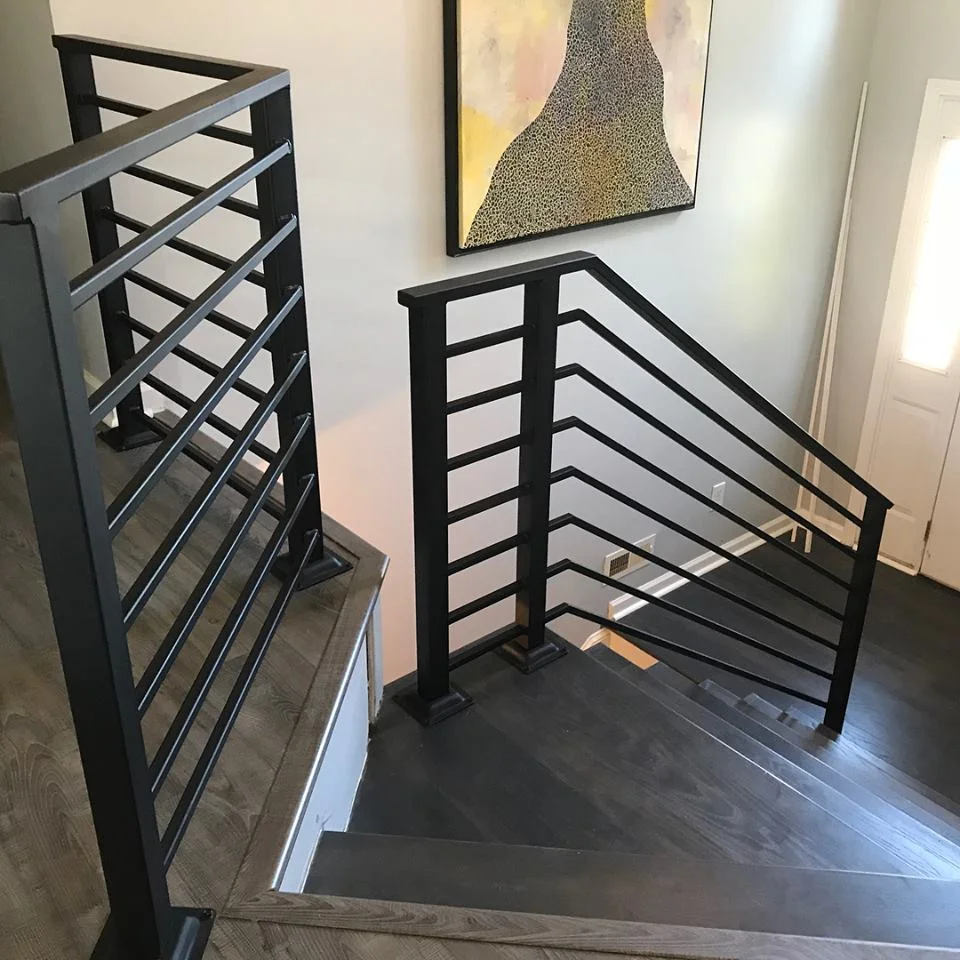
Metal railings can be fabricated into specific shapes, lengths, and patterns. Custom work may be necessary for continuous metal railing sections, unusual angles, or specialized decorative designs.
Cable railing systems
Cable railing systems use posts, cable runs, and tensioning hardware that must be compatible with the layout. Unusual configurations may require custom posts, frames, or connection details.
Mixed-material railings
Combining wood handrails with metal balusters or incorporating different metal finishes may require special fittings or fabrication to connect the components correctly.
Material selection also affects durability, maintenance, and suitability for interior or exterior use.
However, choosing metal does not automatically mean you need custom fabrication. Many wrought iron balusters and railing components are available in standard sizes and styles.
How Does Custom Fabrication Affect Project Cost?
Custom fabrication generally costs more than using readily available components because it can involve additional design work, material preparation, fabrication, and finishing.
However, the actual difference depends on the complexity of the project.
A relatively simple custom handrail section may require less work than a large decorative railing with multiple curves and specialized connections.
Factors that influence pricing include:
Project size: Longer railing sections typically require more materials and labor.
Design complexity: Curves, decorative patterns, and unusual connections can increase fabrication requirements.
Material selection: Different metals, finishes, and component types have different costs.
Existing conditions: Additional preparation may be necessary when mounting surfaces or support locations need attention.
Installation requirements: Complicated layouts may require more time for fitting and installation.
Custom fabrication is not always the most expensive option over the full project.
If standard components require extensive modifications or do not fit properly, choosing a custom-made railing may help avoid repeated adjustments and replacement materials.
Is the additional cost worth it?
That depends on what you need.
If standard components can provide the desired design and meet safety requirements, paying for extensive custom fabrication may not offer much additional value.
However, when the staircase has unusual dimensions or requires a specific railing configuration, the additional cost can be justified by achieving a proper fit.
The best approach is to compare what is included in each option rather than looking at the initial material price alone.
Does Custom Fabrication Take Longer Than Standard Railing Work?
Custom fabrication may require a longer project timeline because components must be prepared specifically for your staircase.
Standard railing materials may already be available from a supplier. Custom components often involve additional steps before installation can begin.
These may include:
Reviewing the staircase and taking measurements
Confirming the railing design and material requirements
Preparing or fabricating the necessary components
Applying the selected finish
Scheduling installation and checking the final fit
The timeline depends on the design, material availability, fabrication workload, and installation requirements.
A simple custom railing section may be relatively straightforward to produce, while an elaborate curved railing can require more preparation.
If you have a renovation deadline, discuss the proposed schedule with your contractor before approving the project.
This is particularly important when other work, such as flooring installation or staircase renovations, must be coordinated with the railing installation.
How Can a Professional Determine Whether Custom Fabrication Is Needed?
The most reliable way to determine whether your staircase needs custom fabrication is to have the project evaluated before ordering materials.
A railing contractor can compare the staircase's existing conditions with your preferred design and the available standard components.
During this evaluation, they may consider:
The staircase's overall shape and dimensions
Existing handrails, balusters, and newel posts
Available mounting and connection points
The suitability of standard railing materials
Applicable building and safety requirements
The desired appearance and finish
Your project budget and schedule
The contractor can then recommend whether standard components, modified stock materials, custom-fabricated sections, or a combination would be appropriate.
This assessment helps prevent unnecessary fabrication expenses while ensuring that important fit and installation requirements are not overlooked.
Discuss Your Stair Railing Project With Master Fabrication
At Master Fabrication, we help homeowners in Charlotte, NC, and surrounding areas with custom metal railings, wrought iron balusters, cable railings, and interior and exterior railing installations.
We understand that every staircase has its own dimensions and installation requirements. Some projects can be completed using standard components, while others benefit from custom-fabricated railing sections.
Our in-person design consultations allow us to review your staircase, discuss your preferred style, and help determine the appropriate approach.
Whether you are replacing existing balusters or considering an entirely new railing, we can help you explore options that fit your home and budget.
Contact Master Fabrication today to request a consultation and find out whether custom fabrication is right for your stair railing project.
FAQs
Is custom fabrication necessary for every stair railing replacement?
No. Many railing replacements can use standard balusters, handrails, and fittings. Custom fabrication is typically needed when standard components cannot accommodate the staircase's shape, dimensions, or design requirements.
Can standard iron balusters be used with an existing wooden handrail?
Yes, in many cases. Standard iron balusters can be installed while retaining an existing wooden handrail and newel posts, provided the components and existing structure are suitable for the installation.
Are curved stair railings always custom-made?
Not always, but curved staircases frequently require custom-fabricated components. The need depends on the staircase's shape and whether available railing systems can accommodate the required curve and slope.
Can custom railing fabrication match an existing staircase design?
Often, yes. Custom fabrication can help reproduce certain decorative details, dimensions, or railing shapes. However, the ability to match a design depends on the materials, existing conditions, and complexity of the original features.
How do I know whether custom fabrication is worth the cost?
Consider whether standard components can provide the required fit, safety, and appearance. If they cannot, custom fabrication may be the better investment. A professional assessment can help you compare your options.
Can custom and standard railing components be used together?
Yes. A project may use standard balusters or fittings alongside specially fabricated railing sections. This approach can help achieve a specific design without requiring every component to be custom-made.