
Wrought Iron vs Cable Railing for Interior Stairs
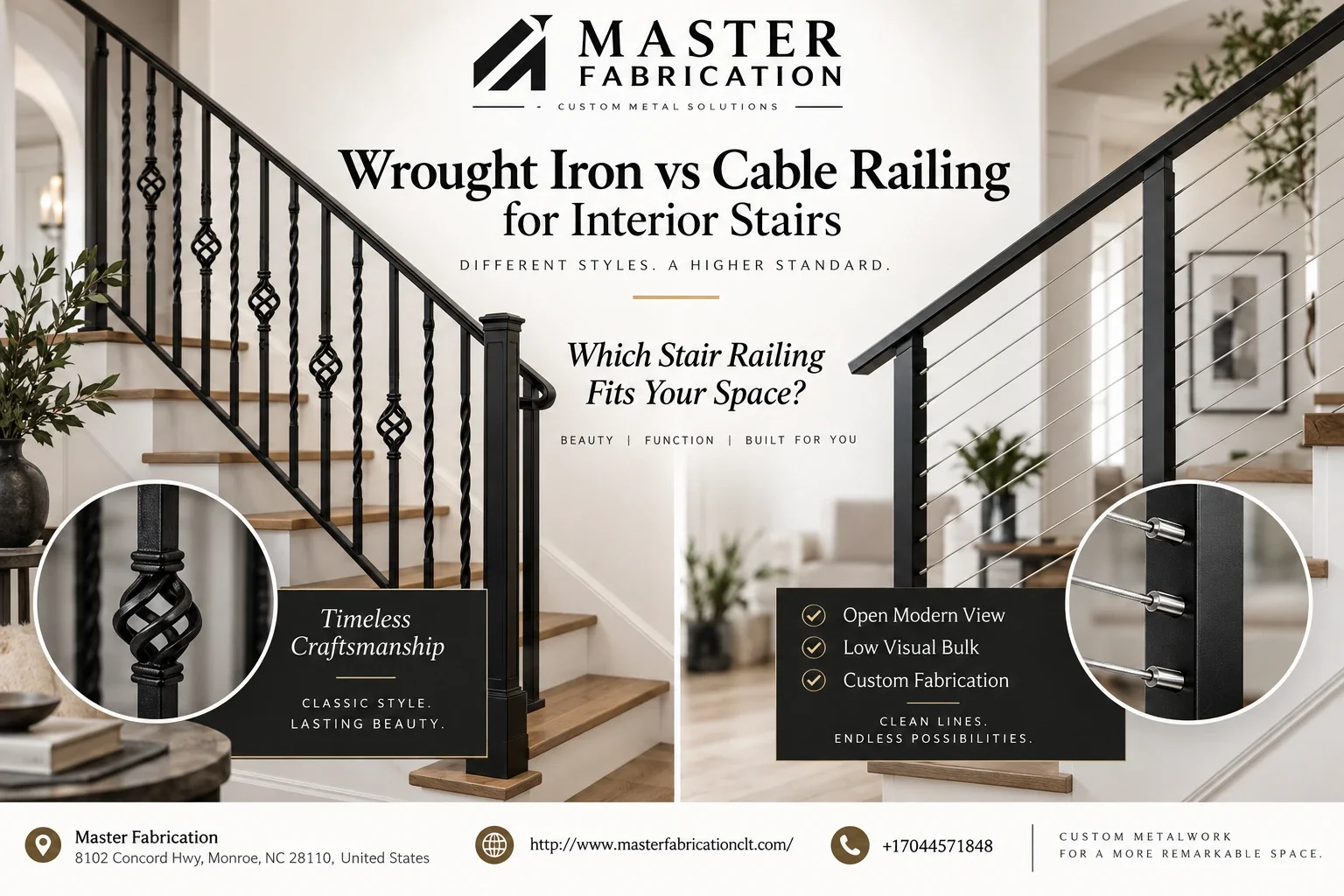
Wrought iron and cable railing create very different looks for interior stairs. Wrought iron tends to feel more decorative, substantial, and traditional, while cable railing creates a lighter, more open appearance with strong horizontal lines.
Neither option is automatically better. The right choice depends on the architecture of the home, how much visual openness you want, maintenance preferences, project budget, and the overall design of the staircase. Homeowners should also consider how each system will be fabricated, installed, and configured for the specific stair layout.
Wrought Iron vs Cable Railing: What Is the Difference?
The biggest difference between wrought iron and cable railing is the way each system fills the space between posts and handrails.
Wrought iron-style railings typically use metal balusters, pickets, scrollwork, or other solid fabricated components. Modern projects described as wrought iron are often fabricated from steel while maintaining the appearance associated with traditional ironwork.
Cable railing uses tensioned metal cables stretched between posts.
That difference affects several aspects of the finished staircase, including:
Visual weight
Sightlines
Design style
Maintenance
Fabrication requirements
Installation
Cost
Overall feel of the room
Wrought iron tends to make the railing itself a more visible architectural feature.
Cable railing is generally designed to reduce visual interruption and make the staircase feel more open.
Which Railing Creates a More Open View?
Cable railing usually creates the more open view.
The thin cables allow sightlines to continue through the railing, which can make staircases and surrounding rooms feel less enclosed.
This can be particularly useful when:
The staircase overlooks a living area
The home has an open floor plan
Natural light is important
The staircase is visually prominent
The room is relatively small
You want the railing to feel less visually heavy
Wrought iron can also create an open appearance, especially when the design uses simple, widely spaced vertical balusters.
However, decorative patterns, thicker components, and closely spaced elements can give wrought iron railings more visual presence.
If openness is the main priority, cable will generally create the lighter appearance.
How Do Wrought Iron and Cable Railings Compare in Appearance?
Wrought iron is often chosen when homeowners want the railing to function as a decorative feature.
Designs can range from relatively simple vertical balusters to more detailed patterns.
The look may feel:
Traditional
Transitional
Formal
Decorative
Craftsman-inspired
European-inspired
Cable railing has a more streamlined appearance.
Its thin horizontal cables and simple posts tend to create a look that feels:
Modern
Contemporary
Minimal
Industrial
Open
Architectural
The surrounding staircase matters as much as the railing.
For example, cable railing paired with warm wood handrails may feel less industrial, while a simple black metal railing can work well in both traditional and contemporary homes.
The finish, post shape, handrail material, and surrounding interior finishes can shift either option toward a different style.
Which Option Requires Less Maintenance?
Both can be relatively manageable indoors, but their maintenance needs are different.
Wrought Iron-Style Railings
Interior metal railings generally need periodic dusting and cleaning.
Homeowners should also watch for:
Scratches
Chipped finishes
Loose connections
Surface damage
Corrosion if moisture is present
A properly finished indoor metal railing usually does not experience the same weather exposure as an exterior system.
Cable Railings
Cable systems may need:
Periodic cleaning
Inspection of fittings
Tension checks
Adjustment if cables become loose
Fingerprints and dust can sometimes be more visible on stainless components.
Cable tension is one of the main differences. The system depends on properly tensioned cables, so maintenance involves more than simply keeping the surface clean.
Neither option should be considered completely maintenance-free.
How Do the Two Railing Styles Compare for Safety?
Both systems can provide safe stair protection when they are properly designed, fabricated, and installed for the project.
Safety depends more on the complete railing system than on whether it uses cable or metal balusters.
Important considerations include:
Railing height
Opening sizes
Handrail configuration
Post stability
Connection strength
Attachment points
Cable tension
Overall installation quality
Cable railings require proper tension and spacing. Loose cables can create openings larger than intended.
Metal baluster railings also need appropriate spacing and secure connections.
Local building requirements may affect how either railing can be configured, particularly around stairs, landings, and elevated areas.
A professional fabricator should evaluate the actual staircase rather than relying only on inspiration photos.
Which Home Styles Work Best With Wrought Iron?
Wrought iron-style railings are highly versatile and can work with many architectural styles.
They are especially common in:
Traditional homes
Transitional interiors
Mediterranean-inspired homes
European-style interiors
Craftsman homes
Farmhouse designs
Decorative ironwork can create a more formal appearance, while simpler metal balusters can fit comfortably into contemporary or transitional interiors.
The level of ornamentation makes a major difference.
A straightforward black metal railing with clean vertical lines can look considerably more modern than one using scrolls or decorative baskets.
Homeowners who want the staircase itself to become an architectural focal point often appreciate the customization available with fabricated metal designs.
Which Home Styles Work Best With Cable Railing?
Cable railing generally fits best with interiors where openness and simple lines are already part of the design.
It commonly works well in:
Contemporary homes
Modern interiors
Industrial-style spaces
Mountain-modern homes
Minimalist designs
Coastal contemporary interiors
Open-concept renovations
Cable can also work in transitional homes when combined with wood posts or handrails.
The horizontal lines create a distinctly different visual effect from traditional vertical balusters, so homeowners should consider how that pattern interacts with nearby flooring, cabinetry, windows, and architectural details.
A cable railing can look out of place when the surrounding interior is heavily traditional unless the design intentionally blends the two styles.
What Are the Cost Considerations for Each Option?
The cost of either railing can vary significantly depending on design and project complexity.
Factors affecting wrought iron-style railing costs may include:
Amount of custom fabrication
Number of decorative components
Metal dimensions
Stair angles
Landings
Finish
Installation conditions
Number of posts and connections
Cable railing costs may depend on:
Number of cable runs
Post spacing
Cable hardware
Tensioning fittings
Handrail material
Stair geometry
Installation complexity
Cable railing is not automatically the less expensive option simply because it appears visually minimal.
High-quality cable fittings, posts, fabrication, and installation can add significant cost.
Likewise, a simple fabricated metal railing may cost less than a highly decorative custom design.
When comparing estimates, make sure the quotes include similar scopes, such as measurements, fabrication, finishing, installation, hardware, and removal of an existing railing if applicable.
Which Railing Is Better for Interior Stairs?
The better option depends on what you want from the staircase.
Wrought iron may be the stronger fit when you want:
A more substantial appearance
Decorative possibilities
Vertical railing lines
Traditional or transitional styling
A railing that becomes a design feature
Cable railing may be preferable when you want:
Maximum visual openness
Minimal interruption of sightlines
A modern appearance
Horizontal design lines
A lighter-looking staircase
There are also practical considerations.
A staircase with unusual angles, limited mounting locations, or specific structural conditions may work better with one configuration than another.
The decision should consider the actual stair layout as well as appearance.
How to Choose the Right Railing for Your Home
Start by deciding what role you want the railing to play in the room.
Do you want it to stand out as an architectural feature, or would you rather minimize its visual presence?
Then consider:
Home style: Which option works naturally with the surrounding architecture?
Openness: How important are clear sightlines through the staircase?
Maintenance: Are you comfortable periodically checking cable tension?
Customization: Do you want decorative metalwork or a simpler design?
Budget: What does each complete project cost, including fabrication and installation?
Existing staircase: Which system works best with the available mounting points and dimensions?
Long-term design: Will the railing still fit the direction of future renovations?
Seeing samples or completed projects can make the comparison easier than looking at materials individually.
At Master Fabrication, we help homeowners evaluate railing options based on the staircase itself, the surrounding interior, and the look they want to achieve. Whether you prefer the more substantial character of a fabricated metal railing or the open appearance of cable, careful measurements and project-specific planning are essential to creating a finished railing that fits the space properly.
FAQs
Is cable railing more modern than wrought iron?
Generally, yes. Cable railing is commonly associated with modern and contemporary interiors because of its thin horizontal lines and open appearance. However, simple fabricated metal railings can also create a modern look.
Does wrought iron block the view more than cable?
Usually. Solid metal balusters are more visually noticeable than thin cables. The difference can be smaller when the metal railing uses a very simple, open design.
Is cable railing harder to maintain?
Cable railing may require occasional tension checks or adjustments in addition to routine cleaning. Fabricated metal railings typically require cleaning and inspection for finish or connection damage.
Which railing is better for a traditional home?
Wrought iron-style fabricated metal railings generally fit traditional interiors more naturally. Decorative patterns can reinforce that style, while simpler designs can create a transitional appearance.
Can cable railing work with wood stairs?
Yes. Cable systems are often combined with wood handrails, posts, or stair components. The combination can create a warmer appearance than an all-metal system.
Is cable railing cheaper than wrought iron?
Not necessarily. Cost depends on the specific design, materials, hardware, fabrication, finishing, and installation. A custom cable system can cost more than a relatively simple fabricated metal railing.
Can wrought iron railings be customized?
Yes. Fabricated metal railings can be customized through post styles, baluster patterns, handrail shapes, decorative elements, dimensions, and finishes.
Which option makes a small staircase look larger?
Cable railing generally provides greater visual openness, which may help a compact staircase feel less enclosed. A simple metal railing with narrow vertical elements can also create an open effect.
Are cable railings suitable for stairs with children?
Cable railings can be used in residential settings when properly designed and installed, but homeowners should discuss the specific configuration, opening limitations, and applicable requirements with the fabricator.
Should I compare railing options before getting measurements?
You can discuss style preferences first, but final design decisions should take the actual staircase dimensions and mounting conditions into account. Accurate field measurements are especially important for custom fabrication.