
Cable Railing vs Traditional Balusters: Which Makes a Room Feel More Open?
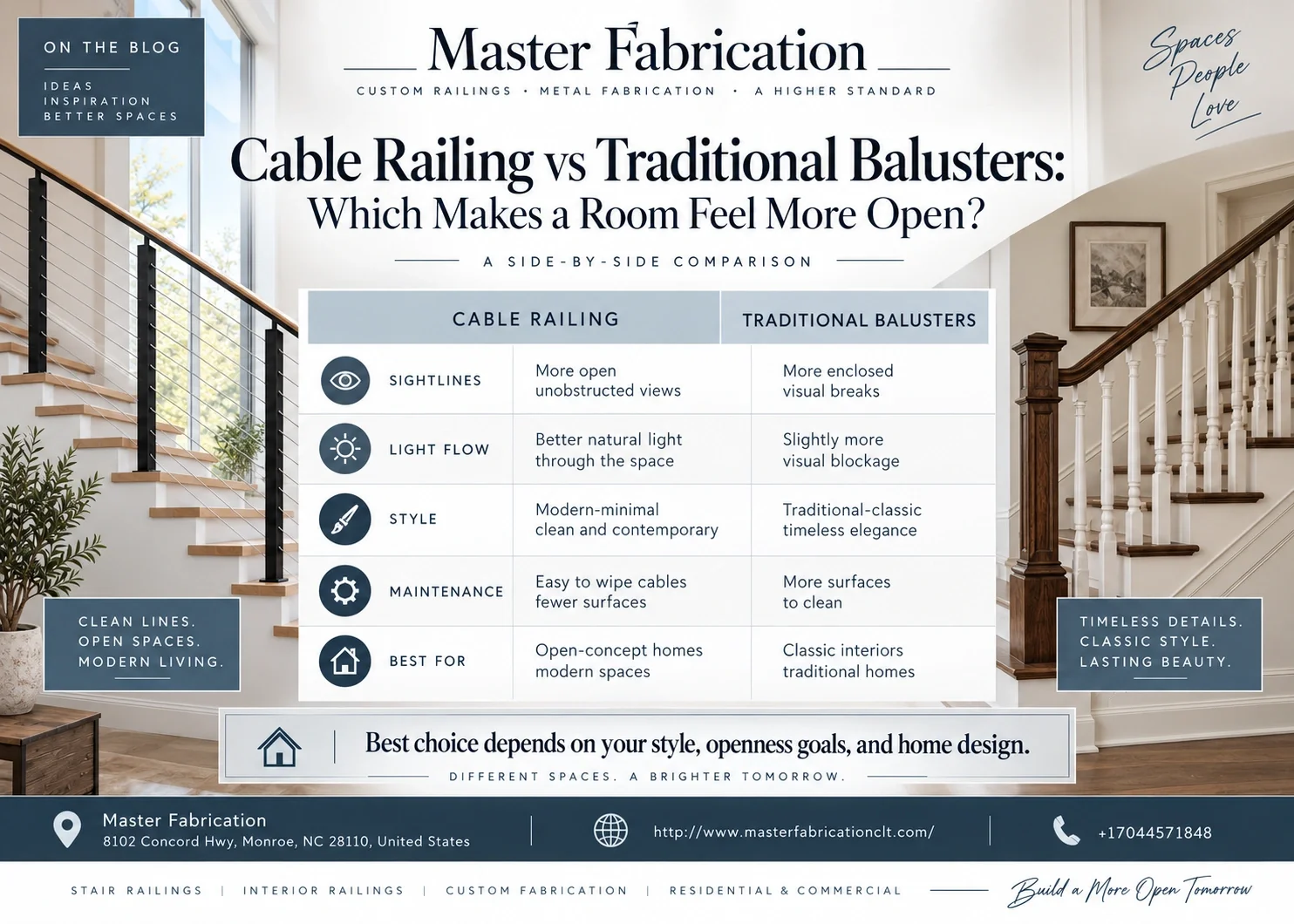
Cable railing usually makes a room feel more open because the thin horizontal cables create fewer visual interruptions than traditional balusters. This can improve sightlines, allow more light to pass through, and make staircases, lofts, and upper-level landings feel less enclosed.
Traditional balusters can still work beautifully, especially in homes where architectural detail matters more than achieving the most open look possible. The better choice depends on your room size, style, lighting, and how much visual separation you want between spaces.
Cable Railing vs Traditional Balusters: What Is the Difference?
The biggest difference is how much visual space each system occupies.
Cable railing typically uses slender stainless steel cables stretched horizontally between posts. Because the cables are thin and widely spaced within code requirements, they tend to disappear visually from a distance.
Traditional balusters use a series of vertical elements, which may be made from:
Wood
Wrought iron
Steel
Aluminum
Composite materials
Balusters can be simple and narrow or highly decorative.
From a design perspective, cable railing feels lighter and more minimal, while traditional balusters tend to create a stronger visual frame.
That difference affects how open or enclosed a room feels.
Which Railing Style Creates Better Sightlines?
Cable railing generally creates better uninterrupted sightlines.
The thin cables allow your eye to travel through the railing instead of stopping at a series of thicker vertical elements.
This can be especially useful when a railing overlooks:
A living room
A foyer
An open staircase
A great room
A loft
A lower-level family room
Large windows or scenic views
Traditional balusters can interrupt the view more noticeably because there are many repeated vertical elements.
The effect becomes even stronger when the balusters are thick, closely spaced, or decorative.
If preserving visibility across multiple areas of the home is a priority, cable railing usually has the advantage.
Does Cable Railing Make a Room Feel Larger?
It can.
Cable railing does not physically increase square footage, but it can make spaces feel larger by reducing visual barriers.
When the eye can see beyond the staircase or landing, adjacent spaces feel more connected.
This effect can be particularly noticeable in homes with:
Smaller foyers
Narrow staircases
Split-level layouts
Loft areas
Open-concept floor plans
Limited natural light
A bulky railing can visually divide these areas into smaller sections.
Cable railing allows more of the surrounding room to remain visible, which can create a stronger sense of continuity.
This is one reason homeowners often choose it during interior renovations focused on creating a more modern or spacious feeling.
How Do Traditional Balusters Affect Openness?
Traditional balusters create more visual structure.
That is not necessarily a disadvantage.
In some interiors, the stronger presence of vertical balusters helps define the staircase as an architectural feature.
For example, detailed iron balusters or painted wood spindles can add character to a formal entryway.
However, traditional balusters generally reduce openness compared with cable.
The effect depends on:
Baluster thickness
Spacing
Material
Color
Decorative detail
Post size
Thin metal balusters can still feel relatively open.
Large turned wood balusters create a more substantial visual barrier.
Color matters too. Dark, heavy balusters may stand out strongly against a light interior, while slim white balusters can blend into the surrounding space.
Traditional does not automatically mean closed-in, but it tends to create more visual separation than cable.
Which Option Allows More Natural Light?
Cable railing usually allows more natural light to pass through.
Because the cables occupy very little visual area, sunlight can move more freely between rooms and across stairwells.
This can help when a staircase is positioned near:
Large windows
Glass doors
Skylights
Two-story foyers
Open living areas
Traditional balusters cast more visible shadows and can block a greater portion of incoming light.
The difference may be minor in a bright, oversized room, but much more noticeable in a small staircase or hallway with limited windows.
If natural light is an important part of the home's design, cable railing often supports that goal better.
How Room Size Influences the Best Railing Choice
Room size can strongly influence which system feels right.
Small Rooms
In compact interiors, cable railing can help avoid adding visual weight.
Thin lines keep the staircase from dominating the room.
Large Rooms
In spacious homes, either option can work well.
Traditional balusters may add architectural interest without making the room feel crowded.
Cable can reinforce an open, modern aesthetic.
Narrow Staircases
Cable railing often works well in narrow stair areas because it reduces the sense of enclosure.
Large Foyers
A large entryway can support more decorative railing without feeling visually cramped.
In these settings, traditional balusters may become part of the home's focal point.
The best decision is not simply based on which railing is more open overall. It is about how much visual weight the room can handle comfortably.
Which Architectural Styles Work Best With Each Option?
Both railing styles can work across different interiors, but each naturally supports certain aesthetics.
Cable Railing
Cable railing tends to fit well with:
Modern homes
Contemporary interiors
Industrial spaces
Coastal designs
Minimalist layouts
Transitional homes
It pairs especially well with wood posts, metal framing, or mixed-material stair systems.
The clean horizontal lines can make a traditional staircase feel more updated without removing warmth from the space.
Traditional Balusters
Traditional balusters are often a strong fit for:
Colonial homes
Craftsman interiors
Traditional architecture
Transitional spaces
Farmhouse designs
Formal entryways
The variety of shapes and materials makes them highly customizable.
For example, a simple square iron baluster can feel transitional, while an ornate scroll pattern creates a more decorative appearance.
The right railing should complement the existing trim, flooring, cabinetry, and overall architectural character.
How Do Maintenance Needs Compare?
Maintenance depends mostly on the material.
Cable railing is generally low-maintenance, especially when stainless steel components are used.
Typical care may include:
Wiping down cables
Checking cable tension
Cleaning fingerprints from metal
Inspecting hardware periodically
Cable tension can occasionally need adjustment over time.
Traditional balusters vary more.
Wood balusters may require:
Dusting
Cleaning
Touch-up paint
Refinishing
Repair if damaged
Metal balusters are usually easier to maintain, though painted or coated finishes can chip or scratch.
From a cleaning perspective, cable systems may feel simpler because there are fewer bulky surfaces.
However, long horizontal cables can collect dust, so they are not completely maintenance-free.
What Should You Consider Before Choosing a Railing System?
Openness is important, but it should not be the only factor.
Before choosing a railing, consider:
Your home's architectural style
Staircase width
Natural light
Desired sightlines
Maintenance preferences
Material durability
Budget
Code requirements
Child and pet considerations
Long-term resale appeal
You should also think about how the railing looks from several angles.
A system that appears perfect from the living room may look very different from the upper landing.
Viewing the staircase as part of the entire room usually leads to a better decision than evaluating the railing in isolation.
Which Railing Style Is Right for Your Interior?
If your main goal is to create the most open visual effect possible, cable railing is usually the stronger choice.
Its thin lines preserve views, allow more light through, and reduce the visual weight of the staircase.
Traditional balusters may be better if you want:
More architectural detail
A classic appearance
Stronger visual definition
Decorative customization
A style that matches existing trim and millwork
Neither option is automatically better in every home.
A modern open-concept interior may benefit greatly from cable railing, while a historic or traditional home may feel more balanced with carefully selected balusters.
At Master Fabrication, we help homeowners compare railing options based on more than appearance alone. Room proportions, material choices, structural conditions, and design goals all matter when creating a railing system that feels like it belongs in the home.
If you are deciding between cable railing and traditional balusters, a custom railing consultation can help you see which option will create the right balance of openness, style, and function for your interior.
FAQs
Does cable railing really make a room look bigger?
It can make a room feel bigger by reducing visual barriers and improving sightlines. The actual room dimensions do not change, but adjacent spaces can feel more connected.
Are traditional balusters too bulky for small spaces?
Not always. Thin metal balusters or simple wood designs can still work well in smaller rooms. However, highly decorative or thick balusters generally create more visual weight.
Does cable railing block less light than balusters?
Usually, yes. Thin cables occupy less visual space than most traditional balusters, allowing more natural light to pass through the railing system.
Is cable railing only for modern homes?
No. Cable railing is often associated with modern design, but it can work in transitional, coastal, industrial, and even updated traditional interiors depending on the posts and materials used.
Which railing is easier to maintain?
Cable railing is generally low-maintenance, though cable tension should be checked periodically. Traditional wood balusters may require more painting or refinishing, while metal balusters are also relatively easy to care for.
Which railing style adds more character?
Traditional balusters usually provide more opportunities for decorative detail. Cable railing offers a cleaner, understated look that puts more emphasis on the surrounding architecture and views.