
Wood Newel Posts With Iron Balusters: How to Create a Balanced Look
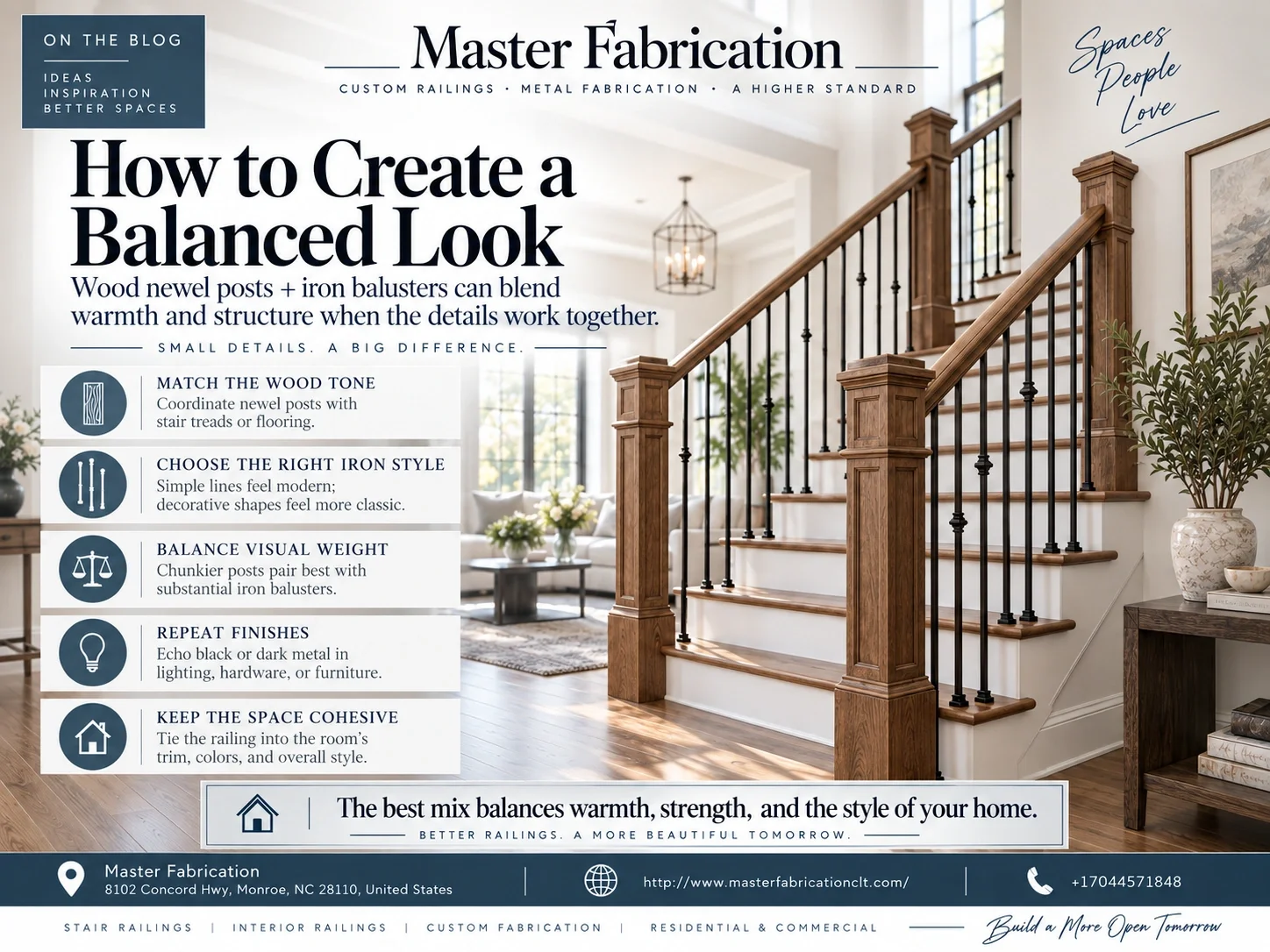
Wood newel posts with iron balusters create a balanced stair design by combining the warmth and visual weight of wood with the lighter, more refined appearance of metal. The key is coordinating proportions, finishes, baluster patterns, and surrounding architectural details so neither material feels disconnected from the rest of the staircase.
This combination can work in traditional, transitional, farmhouse, and even contemporary interiors. A heavy stained newel with ornate iron creates a very different look from a streamlined oak post paired with simple black balusters, so the best design depends on the character of the home.
Why Wood Newel Posts and Iron Balusters Work Well Together
Wood and iron naturally create contrast.
Wood tends to feel warm, substantial, and traditional, while iron introduces sharper lines and a more architectural appearance. Used together, they can make a staircase feel detailed without becoming visually heavy.
The newel posts typically act as anchors. Their larger size gives the railing structure and creates clear starting, ending, and turning points.
Iron balusters fill the spaces between those anchors with much thinner elements.
This creates a useful visual hierarchy:
Newel posts provide weight
Iron balusters create rhythm
Handrails connect the materials
Metal details add contrast
Wood introduces warmth and texture
The combination also gives homeowners more flexibility than using a single material throughout the staircase.
For example, a home with traditional wood floors can retain that warmth through wood posts and rails while iron balusters make the staircase feel more updated.
How to Choose the Right Wood Species for Newel Posts
The best wood species usually relates to materials that already exist in the home.
Common choices include:
Oak
Oak is a classic staircase material with visible grain and a substantial appearance.
It works well with:
Black iron balusters
Oil-rubbed bronze finishes
Traditional interiors
Transitional designs
Red oak often has warmer undertones, while white oak can work especially well in lighter or more contemporary interiors.
Maple
Maple has a smoother, more subtle grain.
It can be a good option when you want the newel posts to feel clean rather than rustic.
Maple often works well with simple iron balusters and understated finishes.
Poplar
Poplar is frequently used for painted stair components.
If the design calls for white or another painted newel post instead of stained wood, poplar can provide a smooth surface.
Walnut
Walnut creates a richer and more dramatic appearance.
Its deep natural coloring pairs particularly well with dark metal.
Because walnut makes a strong visual statement, simpler baluster designs often keep the staircase from feeling too elaborate.
Other Hardwoods
Depending on the home, species such as cherry, mahogany, or custom hardwoods can also work.
Rather than selecting wood in isolation, compare it with:
Flooring
Doors
Cabinetry
Trim
Furniture
Existing stair treads
The newel posts do not necessarily need to match every piece of wood exactly, but they should feel intentional within the overall palette.
Which Iron Baluster Patterns Pair Best With Wood
The best baluster pattern depends largely on how decorative the newel posts are.
Simple Straight Balusters
Straight iron balusters create the cleanest appearance.
They pair well with:
Square wood newels
Craftsman-inspired posts
Modernized traditional homes
Transitional interiors
Contemporary spaces
They allow the wood grain and shape of the posts to remain the primary feature.
Basket or Twist Balusters
Twisted or basket-style balusters introduce more decorative detail.
These combinations often work well with:
Turned newel posts
Traditional staircases
Decorative handrails
Formal entryways
A common approach is to alternate decorative balusters with plain ones rather than using an ornate design in every position.
Scroll Designs
Scroll balusters create a formal, decorative appearance.
They can work well in Mediterranean, European-inspired, or highly traditional interiors.
Because scrolls have strong visual presence, they usually look better when the surrounding woodwork is substantial enough to balance them.
Geometric Iron Patterns
Simple geometric designs can bridge traditional wood and contemporary metal.
These work especially well when updating an older staircase without replacing all of its wood components.
The key is avoiding competition.
If the newel post is highly carved or turned, a simpler baluster may produce a more balanced result. If the wood components are understated, the iron pattern can carry more of the decorative interest.
How to Coordinate Wood Stains and Metal Finishes
Wood and metal do not need to match, but they should relate.
Contrast is often what makes the combination successful.
Medium or Dark Wood With Black Iron
This is one of the most versatile combinations.
Black iron creates a crisp contrast with warm wood without competing with its grain.
It works particularly well with:
Oak
Walnut
Dark-stained maple
Traditional hardwood flooring
Light Wood With Matte Black Iron
Light oak and black metal can create a cleaner, more contemporary appearance.
The contrast emphasizes both materials while keeping the staircase visually open.
Warm Wood With Bronze-Toned Metal
Oil-rubbed bronze or similar finishes can soften the contrast between iron and warm wood.
This combination often suits traditional or Old World-inspired interiors.
Painted Wood With Dark Iron
White or off-white newel posts paired with black iron create a high-contrast look that works well in transitional homes.
Wood handrails or stair treads can then bring natural warmth back into the design.
When selecting finishes, look beyond the staircase.
Consider nearby:
Door hardware
Cabinet pulls
Light fixtures
Plumbing fixtures
Furniture hardware
The metals do not need to be identical throughout the home, but repeating similar finishes can make the design feel connected.
How Proportions Affect the Overall Stair Design
Proportion is one of the most important parts of combining wood and iron.
A very thick newel post paired with extremely thin balusters can look disconnected if there is no visual transition between them.
Likewise, oversized decorative iron can overpower a slim staircase.
Consider the relationship between:
Newel post width
Handrail thickness
Baluster size
Stair tread width
Ceiling height
Length of the railing
Size of the surrounding room
Larger staircases and tall entryways can typically accommodate more substantial posts and decorative metal.
Smaller interiors often benefit from simpler components.
The spacing and repetition of balusters matter too. A consistent rhythm creates visual order, while too many different baluster patterns can make the railing feel busy.
A balanced staircase usually establishes one dominant element and allows the other components to support it.
Should Newel Posts Match Other Woodwork in the Home?
They do not have to match exactly.
Trying to create a perfect color match between wood installed at different times can sometimes make differences more noticeable rather than less.
Instead, aim for coordination.
Newel posts may relate to:
Stair treads
Hardwood floors
Handrails
Kitchen cabinetry
Interior doors
Fireplace mantels
Ceiling beams
For example, a staircase might use stained oak treads and handrails with painted newel posts.
Another design might use the same stain on the newels, rails, and treads while contrasting them with white trim.
Both can look cohesive.
Pay attention to undertones.
A very orange-toned stain beside cooler gray-brown flooring may feel disconnected even when both materials are technically "brown."
Viewing samples together in the actual room and lighting is often more useful than choosing from photographs.
How to Balance Traditional and Modern Design Elements
Wood newels with iron balusters are particularly useful in transitional design because they can combine older architectural features with cleaner modern details.
If your home already feels traditional but you want the staircase to look more current, consider:
Keeping existing wood handrails
Simplifying the baluster pattern
Using matte black iron
Refinishing overly warm wood tones
Choosing square rather than highly turned newels
If the home feels very modern but you want to introduce more warmth, consider:
Natural wood newel posts
Visible wood grain
Simple rectangular profiles
Straight iron balusters
A matching wood handrail
The amount of detail determines where the staircase falls on the traditional-to-modern spectrum.
More carving, scrollwork, twists, and dark stains usually push the design toward traditional.
Straighter lines, simpler posts, natural wood, and minimal iron move it toward contemporary.
Popular Wood and Iron Stair Design Combinations
Seeing the materials as complete combinations can make choosing easier.
White Oak + Matte Black Straight Balusters
A strong choice for transitional or modern interiors.
The light wood keeps the staircase warm while the black balusters create clean contrast.
Dark-Stained Oak + Basket Balusters
This combination has a traditional appearance without requiring highly ornate metal throughout the staircase.
Plain balusters can be alternated with basket designs to control the amount of detail.
Painted White Newels + Black Iron + Wood Handrail
This is a popular transitional approach.
The white posts coordinate with trim, the black iron creates contrast, and the natural or stained handrail keeps the staircase connected to wood flooring.
Walnut Newels + Simple Black Iron
Walnut already provides significant visual character, so simple balusters can keep the design balanced and sophisticated.
Craftsman Wood Posts + Geometric Iron
Square posts combined with understated geometric balusters can update Craftsman-inspired homes while maintaining architectural structure.
The strongest combinations generally repeat materials or finishes already found somewhere else in the room.
Common Design Mistakes to Avoid
A staircase contains many repeating elements, so small design decisions can become very noticeable once everything is installed.
Common mistakes include:
Using Too Many Decorative Patterns
Combining twists, baskets, scrolls, and straight balusters in one small section can make the staircase feel unnecessarily busy.
Ignoring Scale
Oversized newel posts may overwhelm a narrow staircase, while very small posts can feel weak in a large two-story foyer.
Mixing Unrelated Wood Tones
Wood does not need to match perfectly, but significantly conflicting undertones can make the staircase feel disconnected.
Over-Matching Every Metal Finish
The railing should relate to the rest of the home, but every fixture does not need to have the exact same finish.
Choosing Components Separately
Selecting the newel post, balusters, handrail, and stain individually without viewing them together can produce combinations that looked good separately but feel mismatched as a system.
Ignoring the Existing Architecture
A highly ornate railing may look out of place in a minimal contemporary home. Likewise, an extremely industrial design may conflict with detailed traditional millwork.
Treat the staircase as part of the architecture rather than as an isolated decorative object.
How to Choose a Combination That Fits Your Interior
Start with the elements that are unlikely to change.
Look at your:
Flooring
Trim
Doors
Stair treads
Wall colors
Cabinetry
Lighting
Overall architectural style
Then decide how much attention you want the staircase to attract.
If the goal is subtle and timeless, keep the iron pattern relatively simple and let the wood provide warmth.
If the staircase is intended to be a focal point, decorative iron or more substantial newel posts can introduce stronger architectural character.
Also consider what you can see from adjoining rooms.
A stair railing in an open floor plan may be visible from the living room, kitchen, foyer, and upper landing. The materials should make sense from all of those viewpoints.
At Master Fabrication, we help homeowners bring wood and metal together in railing designs that feel intentional rather than pieced together. The right combination of newel posts, baluster patterns, finishes, and proportions can complement the home's existing architecture while giving the staircase a distinctive identity.
Whether you are replacing old balusters, redesigning an entire staircase, or trying to coordinate new ironwork with existing wood components, a custom railing plan can help create a more balanced finished result.
FAQs
Do wood newel posts look good with black iron balusters?
Yes. Wood and black iron are a versatile combination because the natural warmth of the wood contrasts with the clean appearance of the metal. The look can range from traditional to contemporary depending on the post and baluster styles.
Should the handrail match the wood newel posts?
It can, and matching the handrail and newels often creates continuity. However, painted posts combined with a stained wood handrail can also create a cohesive transitional look.
Can you mix oak newel posts with iron balusters?
Yes. Oak pairs well with iron because its visible grain creates warmth while iron adds contrast. Both light and dark oak stains can work depending on the surrounding interior.
Are decorative iron balusters outdated?
Not necessarily. Decorative iron can still work beautifully in traditional and transitional homes. The key is selecting a pattern that fits the architecture and avoiding excessive ornamentation when the rest of the interior is simple.
Should iron balusters match the home's door hardware?
They do not have to match exactly, but coordinating the overall tone can help. For example, matte black railing components often work naturally with other black or dark metal accents throughout the home.
How many different iron baluster patterns should you combine?
In many residential staircases, one simple pattern or a combination of plain and one decorative baluster is enough. Larger or more elaborate staircases can support more variety, but maintaining a consistent repeating pattern helps keep the design balanced.