
What Affects the Cost of Custom Stair Railings?
Custom stair railings can vary significantly in price, even when two projects look similar at first glance.
That is because contractors are not estimating only the visible railing material. They are also considering the length of the railing, staircase configuration, material type, fabrication requirements, finish, removal of existing components, site access, installation complexity, and the amount of custom work involved.
At Master Fabrication, we encourage Charlotte homeowners to look at the complete project scope rather than comparing railing prices based on materials alone.
A simple straight staircase using readily available components may involve relatively straightforward planning and installation. A curved staircase with custom-fabricated metalwork, specialty posts, multiple landings, and a custom finish requires a very different amount of preparation and craftsmanship.
Understanding those variables can make it much easier to evaluate a custom railing estimate.
Why Do Custom Stair Railing Costs Vary?
Custom railing costs vary because every staircase presents a different combination of materials, dimensions, design requirements, and installation conditions.
Some of the main pricing factors include:
Total railing length
Number of stair flights
Number of landings
Material selection
Custom fabrication
Railing design
Decorative details
Finish selection
Existing railing removal
Staircase accessibility
Structural preparation
Installation complexity
One homeowner may need a short railing replacement along a straight staircase.
Another may have a two-story staircase with an upper landing, curved sections, custom steel components, and specialty finishes.
Even if both projects are described as "custom stair railings," the actual work involved is very different.
This is why custom railing estimates should be based on the individual staircase rather than a simple cost-per-foot assumption.
How Does Railing Length Affect the Overall Cost?
Railing length is one of the most direct factors affecting cost because longer projects generally require more material.
A larger railing system may need additional:
Handrail material
Balusters
Posts
Mounting hardware
Decorative components
Finish material
Labor requirements can also increase as railing length grows.
For example, a single straight stair run generally involves less material and installation work than a staircase that includes:
Multiple flights
Upper-level guardrails
Several landings
Balcony sections
Open hallway railings
Transitions between railing sections also matter.
A longer railing does not simply mean purchasing more of the same material. Additional turns, connections, posts, and transitions may require more measuring, fabrication, and fitting.
This is why contractors typically evaluate the complete railing layout rather than measuring only the visible stair run.
How Does Material Selection Influence Stair Railing Pricing?
Material choice can have a major effect on the overall budget.
Different railing systems have different material costs, hardware requirements, fabrication needs, and installation methods.
Wood
Wood pricing can vary according to species, profile, grade, and finish.
A relatively standard wood handrail may require less customization than one made from a premium species with detailed shaping or custom staining.
Wrought Iron and Decorative Iron
Iron balusters can range from simple straight components to decorative patterns.
Standard balusters may be relatively straightforward to incorporate, while highly decorative or custom-fabricated designs can require additional work.
Steel
Steel can be used for clean modern railings or custom fabricated systems.
The cost can be influenced by:
Material thickness
Post configuration
Welding requirements
Fabrication complexity
Finish selection
Stainless Steel
Stainless steel often has different material and fabrication costs from standard steel.
Specialized hardware or polishing requirements may also influence the final estimate.
Cable Railing
Cable systems require more than just cable.
Posts, fittings, tensioning hardware, end connections, and structural requirements all contribute to the total project.
Glass Panels
Glass railing typically requires accurately measured panels along with mounting hardware and supporting structural components.
Custom panel sizes and specialty glass can add preparation and manufacturing requirements.
Mixed-Material Designs
Many custom staircases use a combination of materials.
For example, a railing might include:
Wood handrails
Steel posts
Iron balusters
Glass panels
These combinations can create a distinctive result, but they may also increase coordination and installation complexity.
Why Does Design Complexity Affect the Price?
Design complexity influences both fabrication and installation.
A straightforward railing running in a straight line generally requires less customization than a railing that follows curves, unusual angles, or multiple transitions.
Features that can increase complexity include:
Curved staircases
Angled landings
Multiple railing heights
Custom patterns
Decorative metalwork
Unique baluster spacing
Specialized transitions
Custom post designs
One-of-a-kind railing sections
Custom metal fabrication is a good example.
A simple steel railing made from standard rectangular sections may involve relatively predictable fabrication.
A decorative railing with individually fabricated panels, curves, scrollwork, or complex geometry requires more design work, material preparation, welding, fitting, and finishing.
Complexity can also increase the amount of time required on-site.
Custom components must fit the staircase precisely, so unusual angles or transitions may require additional adjustment during installation.
The more unique the design becomes, the less useful standard component pricing becomes when estimating the final project.
How Do Finishes and Custom Details Affect Cost?
The finish is another important part of a custom railing project.
Some materials can be installed with relatively simple finishing, while others require multiple preparation and application steps.
Possible finishes include:
Paint
Stain
Clear coating
Powder coating
Specialty metal finishes
Custom colors
The cost is not determined only by the finish material itself.
Preparation can be equally important.
For example, a metal railing may require cleaning, surface preparation, coating, curing, and handling before installation.
Wood may require sanding, staining, sealing, or painting.
Custom colors can also introduce additional steps compared with standard finishes.
Decorative details may increase the budget as well.
Examples include:
Custom newel posts
Ornamental balusters
Decorative metal panels
Specialty caps
Custom brackets
Detailed transitions
Integrated accent pieces
These elements can add visual interest while also increasing the amount of fabrication and finishing involved.
How Can Existing Site Conditions Change the Project Cost?
The staircase itself can affect pricing just as much as the new railing.
Before installing custom components, contractors may need to evaluate what is already there.
Important site conditions can include:
Existing railing condition
Stair structure
Mounting surfaces
Accessibility
Existing damage
Previous modifications
Wall locations
Flooring around posts
Space available for installation
Existing Railing Removal
Removing an old railing adds labor and disposal requirements.
A railing that comes apart cleanly may be relatively straightforward to remove.
Another system may be heavily integrated into flooring, trim, or surrounding construction and require more careful demolition.
Structural Conditions
New railing components need suitable attachment points.
If existing mounting surfaces are damaged or inadequate, repairs or modifications may be necessary before installation.
Staircase Access
A staircase that is easy to reach with tools and materials is different from a tight or difficult-to-access location.
Large custom railing sections may require additional handling considerations inside the home.
Code-Related Updates
Older railing systems may have been built under different requirements or may no longer meet current expectations for safety and spacing.
If updates are needed as part of the remodel, the project scope can change.
The important point is that existing conditions are not always obvious from photographs.
An on-site evaluation can reveal details that influence both design and pricing.
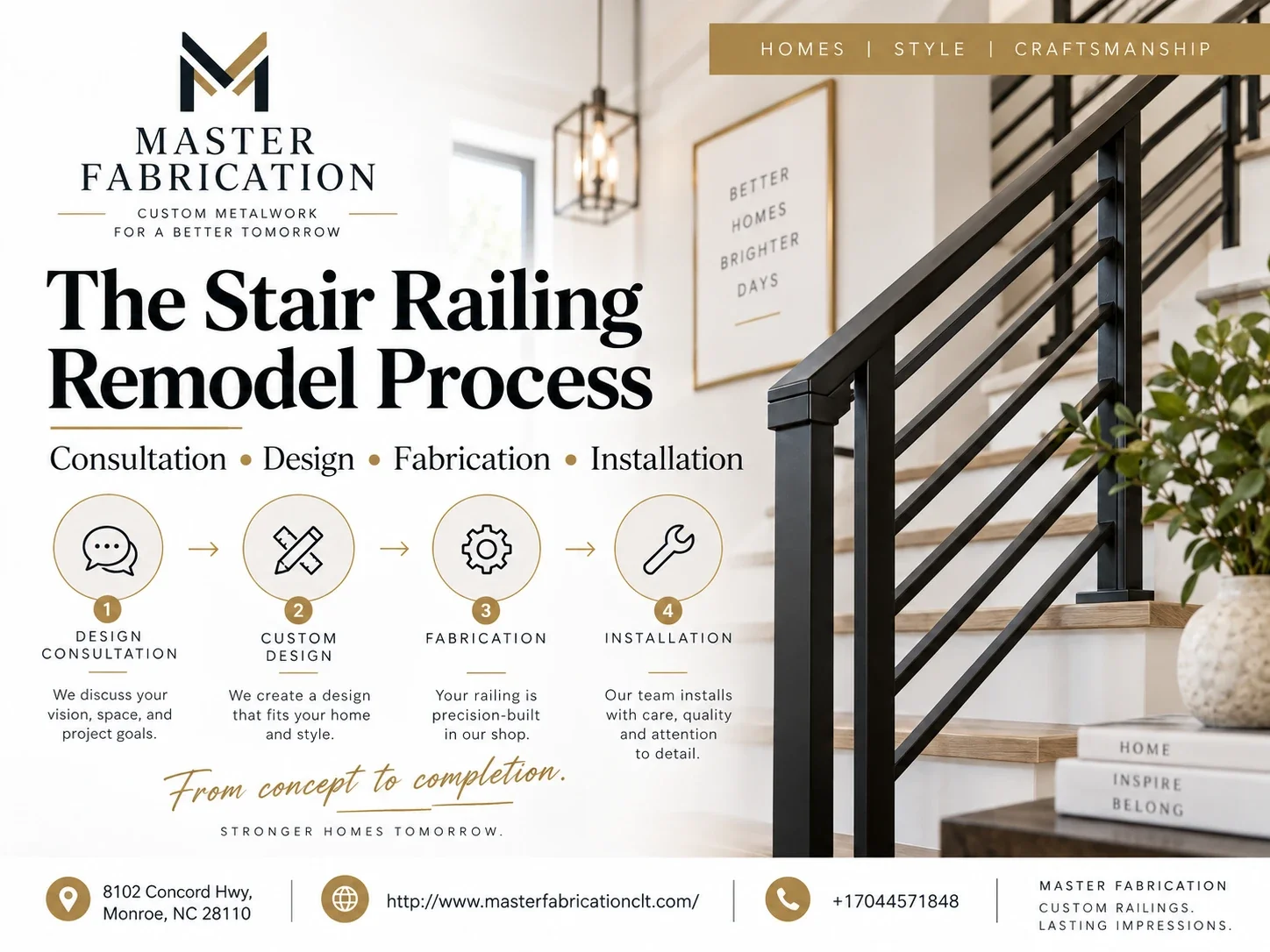
How Does Installation Labor Affect Custom Railing Pricing?
Installation labor involves more than the hours a crew spends physically attaching railing components inside the home.
Custom railing work may involve:
Planning
Measurement
Layout
Fabrication
Material preparation
Welding
Fitting
Removal of existing components
Surface preparation
Installation
Adjustments
Finishing
Cleanup
The type of material also affects labor.
Installing a standard wood component is different from fitting custom steelwork or positioning large glass panels.
Precision matters as well.
Custom railing sections may need to align with exact stair angles, posts, flooring, walls, and landing conditions.
The more complicated the staircase becomes, the more skilled fitting and adjustment may be required.
For that reason, comparing two proposals based only on installation hours can be misleading.
A significant portion of the craftsmanship may take place during fabrication and preparation before the railing reaches the home.
Which Custom Stair Railing Features Can Increase the Budget?
Optional features can create a more personalized staircase, but they may also increase project cost.
Common examples include:
Custom Newel Posts
Specially designed or fabricated posts can become major visual elements within a staircase.
More intricate designs generally require additional material and labor.
Decorative Balusters
Standard straight balusters typically involve less customization than ornate or individually fabricated designs.
Glass Panels
Custom-sized glass panels require precise measurements, manufacturing, and specialized hardware.
Premium Wood Species
Wood species differ considerably in cost, availability, appearance, and finishing requirements.
Specialty Hardware
Custom brackets, connectors, mounts, and decorative hardware can add both material and installation expenses.
Cable Systems
Cable railing can involve specialized posts, tensioning components, end fittings, and additional structural considerations.
Curved Components
Curved handrails or metal sections often need to be made specifically for the staircase.
Integrated Design Features
A railing that incorporates multiple materials, unusual transitions, or one-of-a-kind details may require additional design and fabrication work.
None of these features are inherently necessary.
The goal is to select details that matter to the homeowner and fit the overall project budget.
How to Get an Accurate Estimate for Custom Stair Railings
The most reliable estimate begins with accurate information about the staircase.
A contractor may need to evaluate:
Total railing length
Stair angles
Number of flights
Landings
Existing railing
Mounting conditions
Material preferences
Design complexity
Finish selections
Custom components
Removal requirements
A design consultation can also help clarify which choices have the greatest impact on cost.
For example, a homeowner may initially be comparing two railing styles that look similar but involve very different fabrication requirements.
Understanding those differences before finalizing the design can make budgeting much easier.
When comparing proposals, look at the complete scope rather than only the total number.
Ask what is included regarding:
Materials
Fabrication
Existing railing removal
Installation
Finishing
Custom components
Site preparation
A lower material price does not always mean a lower total project cost if the design requires considerably more fabrication or installation work.
How Our Charlotte Stair Railing Team Can Help
At Master Fabrication, we work with Charlotte homeowners to develop stair railing designs that account for appearance, existing conditions, materials, and project scope.
Some projects are relatively straightforward.
For example, a homeowner may keep the existing wood handrail and replace older balusters with a new iron design.
Other projects may include:
New handrails
Custom posts
Fabricated metal sections
Glass
Cable railing
Specialty finishes
Multiple landings
Structural modifications
Those projects naturally involve different cost factors.
Our goal during the planning process is to understand what you want to change, measure the staircase accurately, review appropriate material and design choices, and identify any conditions that may affect installation.
That information allows an estimate to reflect the actual project rather than relying on generic pricing assumptions.
If you are researching custom stair railing cost factors in Charlotte, a personalized staircase assessment is the most useful next step.
It can help you understand which parts of your design have the greatest impact on the budget and where different choices may simplify or expand the project.
FAQs
What is the biggest factor affecting custom stair railing cost?
There is rarely one single factor. Railing length, materials, design complexity, fabrication, finishes, site conditions, and installation requirements all contribute to the final estimate.
Does a longer railing always cost more?
Longer railing runs generally require more material and labor. However, configuration also matters. A shorter curved railing with custom fabrication may sometimes involve more work than a longer straight run.
Which stair railing material is the most expensive?
There is no universal answer because pricing varies by design, finish, availability, hardware, and fabrication. Custom glass, stainless steel, decorative metalwork, and premium woods may involve different levels of investment depending on the project.
Are iron balusters less expensive than a fully custom metal railing?
They can involve fewer fabrication requirements when standard balusters are used with an existing railing system. A fully custom metal railing generally involves more design, fabrication, and fitting.
Why do curved stair railings cost more?
Curved components often require more precise measurements, specialized fabrication, and additional installation work compared with straight railing sections.
Does powder coating affect railing cost?
Yes. Powder coating involves material preparation, coating, and curing. Specialty colors or finishes may add additional requirements compared with standard options.
Can removing my existing railing add to the cost?
Yes. Removal and disposal require labor, and some existing systems are more difficult to remove than others. Surrounding surfaces may also require preparation afterward.
Do damaged stairs or mounting points affect the estimate?
They can. New railing components need secure attachment locations. Repairs or structural modifications may be necessary if existing mounting areas are damaged or unsuitable.
Does installation cost depend on the railing material?
Yes. Different systems require different levels of handling, fitting, hardware, preparation, and precision. Glass, cable, custom metal, and wood railings can all have different labor requirements.
Are custom newel posts expensive?
Custom posts can increase the budget because they may require additional material, design work, fabrication, or finishing compared with standard components.
Can I reduce the cost of a custom stair railing project?
Possibly. Simplifying the design, choosing readily available materials, retaining suitable existing components, or selecting standard finishes may reduce certain cost factors. The best options depend on your staircase and design priorities.
How can I get an accurate custom stair railing estimate in Charlotte?
An on-site assessment is generally the most reliable approach. Accurate measurements, material selections, existing staircase conditions, design complexity, finishing requirements, and installation needs all have to be evaluated before a dependable estimate can be prepared.